


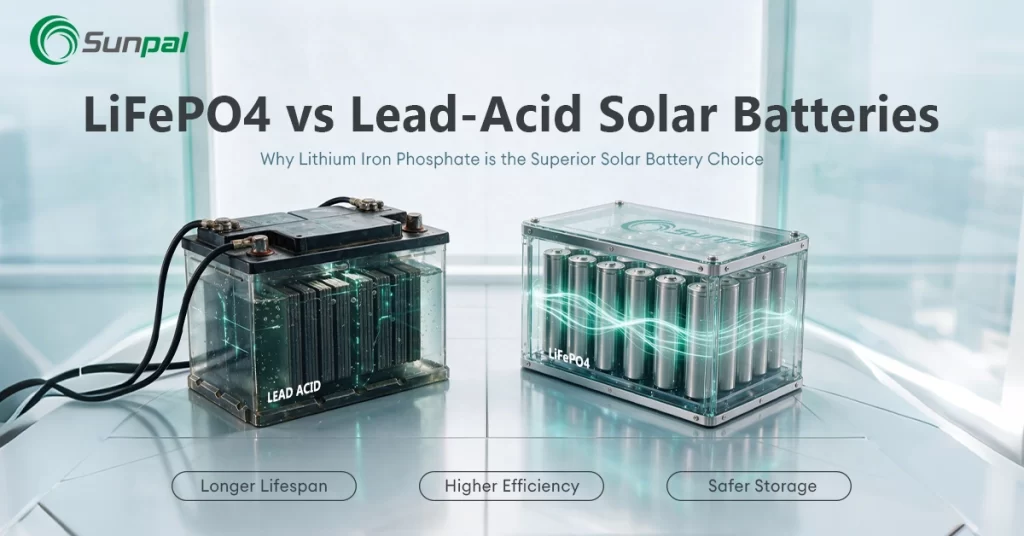
As global demand for renewable energy and solar energy storage continues to grow, choosing the right battery technology has become essential for improving system reliability, efficiency, and long-term value. While lead-acid batteries have been widely used in solar applications for decades, their limitations in lifespan, usable capacity, and maintenance requirements have driven the adoption of advanced lithium battery technologies.
Among these alternatives, 48V lithium solar batteries have emerged as a preferred replacement for lead-acid batteries, making LiFePO4 vs lead-acid batteries one of the most important comparisons for modern solar energy storage systems. This article explores the key advantages that make LiFePO4 batteries a more reliable, efficient, and cost-effective energy storage solution.
Why LiFePO4 Batteries Are the Preferred Replacement for Lead-Acid Batteries?
Compared with lead-acid batteries, LiFePO4 batteries provide significant lithium solar battery benefits, including longer lifespan, higher efficiency, deeper discharge capability, safer operation, and lower lifetime costs, making them a better choice for modern solar energy storage systems.
Key Technical & Economic Advantages of LiFePO4 Solar Batteries
Performance comparison and practical benefits over traditional lead-acid energy storage
Reduced replacement frequency and lower long-term solar storage costs
Learn More →✓ Fewer replacements
✓ Lower lifetime cost
✓ Better solar project ROI
Maximize stored solar energy and minimize power loss daily
Learn More →✓ Less power waste
✓ Higher self-consumption rate
✓ Optimized solar system output
Engineered for daily charge-discharge solar cycling scenarios
Learn More →✓ Slow capacity attenuation
✓ Decade-level durability
✓ Ideal for long-term PV projects
Fully usable energy without locked or restricted battery capacity
Learn More →✓ No wasted battery capacity
✓ Smaller battery bank size
✓ Higher space utilization
Real-time voltage, temperature and current dual protection system
Learn More →✓ Prevents overheating & leakage
✓ Avoids thermal runaway risks
✓ Safer for home & commercial use
Superior long-term economic value for solar energy storage
Learn More →✓ Zero routine maintenance
✓ No frequent battery swap
✓ Cheaper cost per kWh overall
1. Longer lifespan and cycle life
LiFePO4 batteries offer a significantly longer service life compared with lead-acid batteries. While lead-acid batteries typically last 3-5 years with 500-1,000 cycles, LiFePO4 batteries can provide 10-15+ years of operation and 3,000-6,000 cycles, reducing replacement costs over time.
2. Higher usable capacity
LiFePO4 batteries support a deeper depth of discharge (DoD), usually 80%-100%, compared with approximately 50% for lead-acid batteries. This allows lithium batteries to provide more usable energy from the same battery capacity, improving solar system performance.
3. Faster charging and higher efficiency
With higher charge and discharge rates, LiFePO4 batteries charge faster and deliver stable power when high energy demand is required. Their efficiency can exceed 95%, helping reduce energy loss and maximize the use of stored solar power.
4. Lightweight and compact design
Compared with lead-acid batteries, LiFePO4 batteries offer higher energy density, providing more energy in a smaller and lighter package. This makes them easier to install and suitable for residential solar systems, mobile applications, and space-limited projects.
5. Safer operation with intelligent BMS
LiFePO4 batteries feature stable lithium iron phosphate chemistry and an integrated Battery Management System (BMS) that monitors voltage, current, and temperature while protecting against overcharging, over-discharging, overheating, and short circuits. For solar systems using 48V lithium battery technology, advanced BMS functions are essential for improving battery safety, efficiency, and long-term reliability.
6. Lower maintenance and lifetime cost
Unlike lead-acid batteries that require regular maintenance, LiFePO4 batteries are virtually maintenance-free. Although the initial investment may be higher, their longer lifespan, higher efficiency, and fewer replacements result in a lower total cost of ownership.
7. Environmentally friendly solution
LiFePO4 batteries do not contain toxic heavy metals such as lead and have a longer service life, helping reduce battery waste and supporting more sustainable energy storage.
How LiFePO4 Batteries Work in Solar Energy Storage
LiFePO4 batteries store excess solar energy generated during the day and provide power when sunlight is unavailable. Solar panels produce electricity, which is managed by a hybrid inverter and used to charge the battery. The built-in Battery Management System (BMS) monitors voltage, temperature, and battery status to ensure safe operation. At night or during cloudy periods, the stored energy is released to power homes or businesses.
Energy flow: Solar Panels → Hybrid Inverter → Battery Charging → BMS Monitoring → Energy Supply at Night
How LiFePO4 Storage Powers Complete Solar Energy Cycles
LiFePO4 vs Lead-Acid: Long-Term Cost Analysis (LCOS)
For solar energy storage applications, a deep cycle battery comparison is essential because batteries must withstand repeated daily charge and discharge cycles. Evaluating cycle life, usable capacity, efficiency, and maintenance requirements helps determine which battery technology delivers better long-term value and impacts the overall Levelized Cost of Storage (LCOS).
Although lead-acid batteries usually have a lower upfront cost, their shorter lifespan and lower usable capacity often result in higher long-term expenses. In contrast, LiFePO4 batteries require a higher initial investment but provide better lifetime value through longer service life, higher efficiency, and reduced maintenance.
A typical lifecycle cost comparison includes:
- Initial purchase cost: Lead-acid batteries are generally cheaper upfront, while LiFePO4 batteries have a higher initial price due to advanced lithium technology.
- Replacement costs: Lead-acid batteries may need to be replaced multiple times during the lifespan of a LiFePO4 battery.
- Maintenance costs: Lead-acid batteries require more frequent maintenance, while LiFePO4 batteries are virtually maintenance-free.
- Energy efficiency losses: LiFePO4 batteries typically achieve higher round-trip efficiency, meaning more stored solar energy can be effectively used.
When calculated using Levelized Cost of Storage (LCOS), LiFePO4 batteries often provide a lower cost per usable kWh over their lifetime. In many solar storage scenarios, lifecycle analysis shows that LiFePO4 batteries can achieve a significantly lower cost per usable kWh compared with lead-acid batteries because of their longer lifespan, higher usable capacity, and fewer replacements.
10-Year Solar Storage Cost Comparison:
| Parameter | LiFePO4 | Lead Acid |
|---|---|---|
| Battery capacity | 10kWh | 10kWh |
| Usable energy | 90% | 50% |
| Replacement | 1 time | 3 times |
| Maintenance | Low | High |
| Lifetime value | Higher | Lower |
For solar energy storage projects designed to operate for 10 years or more, LiFePO4 technology usually delivers better economic returns despite its higher initial investment.
Best Applications for LiFePO4 Solar Batteries
LiFePO4 batteries are widely used in applications that require reliable and long-lasting energy storage.
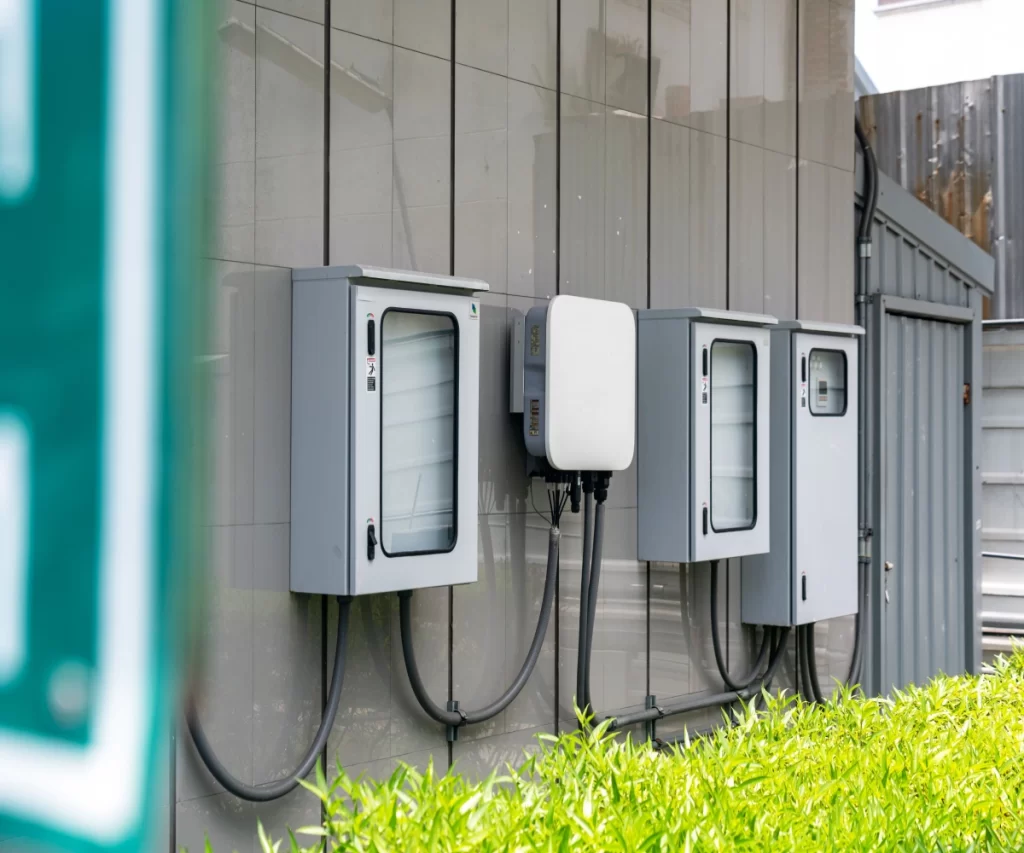

Residential Solar Storage
- Daily solar energy storage
- Backup power during outages
- Higher self-consumption of solar electricity
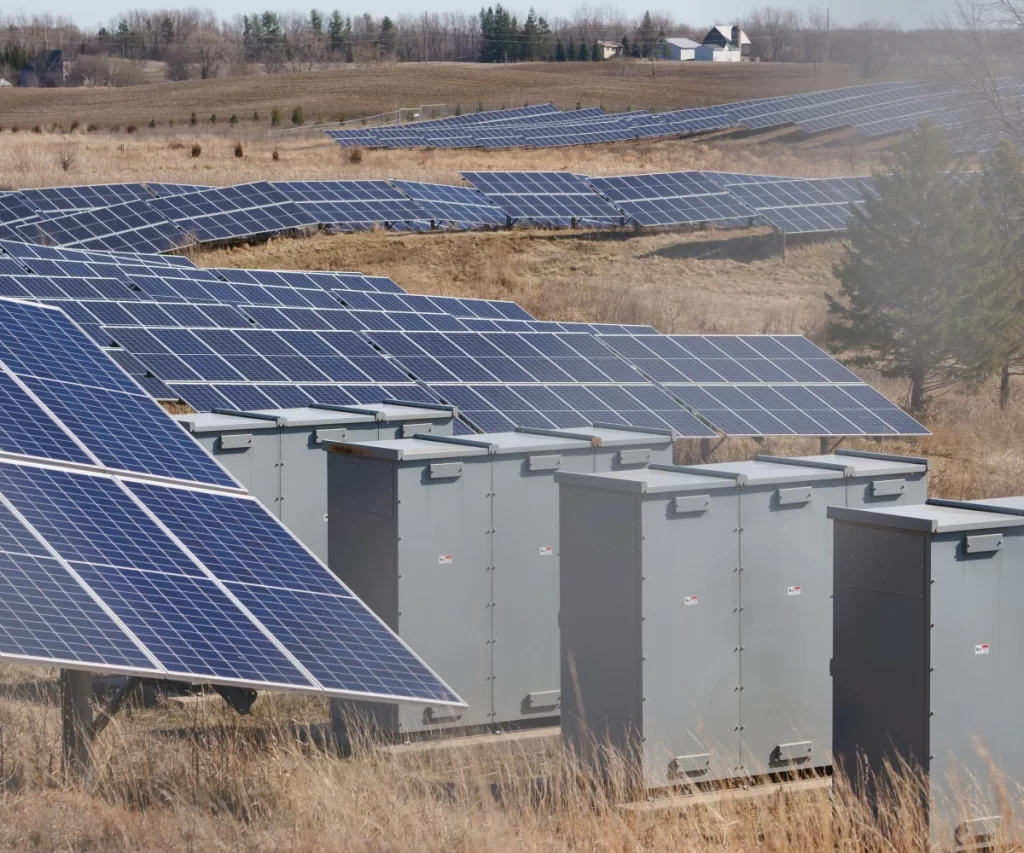
Off-Grid Solar Systems
- Remote locations
- Cabins and farms
- Independent power solutions
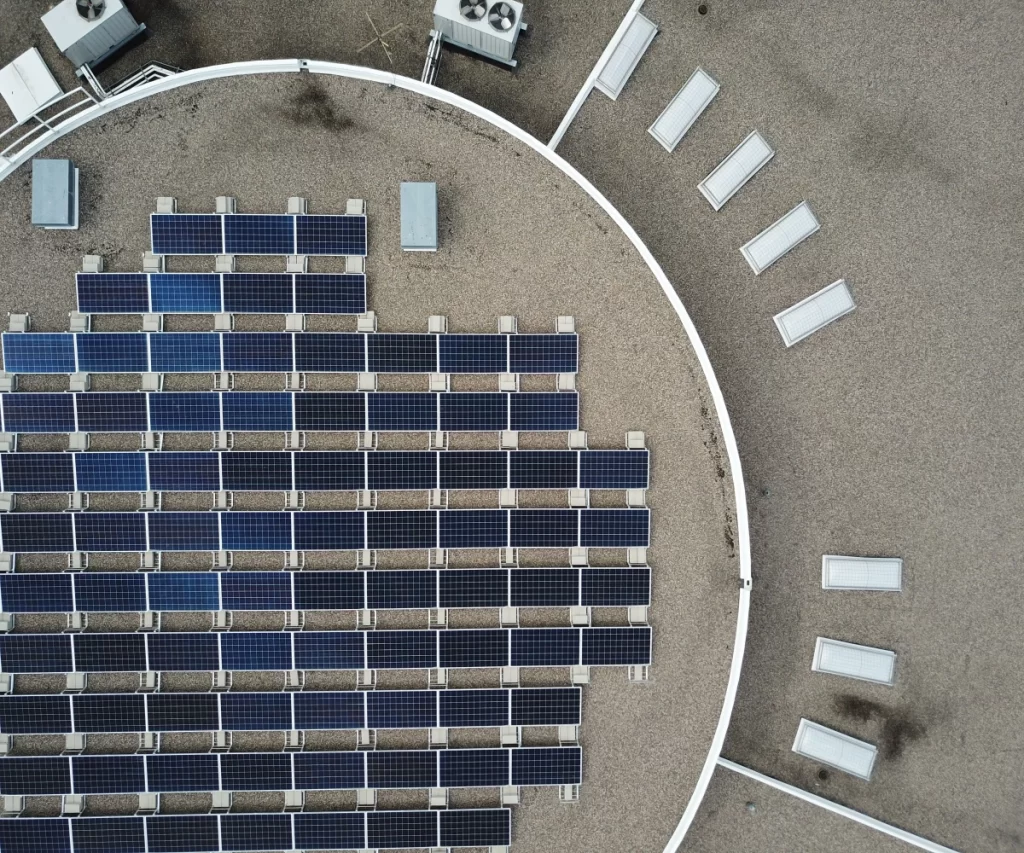
Commercial & Industrial Energy Storage
- Frequent cycling applications
- Peak shaving
- Backup energy systems
RV, Marine, and Portable Power
- Lightweight design
- High energy density
- Low maintenance requirements
LiFePO4 Charging Protocol: Why It Matters
A proper LiFePO4 charging protocol is essential for maintaining battery safety, performance, and long-term reliability. Unlike traditional lead-acid batteries, LiFePO4 batteries require precise charging parameters to protect the cells and maximize their lifespan. Using the correct charging voltage, current, and charging stages helps prevent overcharging, overheating, and unnecessary battery degradation.
For solar energy storage systems, a well-managed charging process ensures that LiFePO4 batteries can deliver stable power output and achieve their expected cycle life of 3,000–6,000 cycles. A Battery Management System (BMS) plays a critical role by monitoring cell voltage, temperature, and charging status, providing protection against overvoltage, overcurrent, and temperature-related issues.
Typical 48V LiFePO4 Charging Settings:
| Parameter | Recommended Value |
|---|---|
| Battery Configuration | 16S LiFePO4 Cells |
| Nominal Voltage | 51.2V |
| Charge Cut-off Voltage | 58.4V |
| Discharge Cut-off Voltage | 44.8V |
| Float Voltage | 53.6V |
| Maximum Charge Current | 0.5C |
LiFePO4 Standard Charging Process
Smart Battery Management System (BMS): The Intelligence Behind LiFePO4 Solar Batteries
Unlike traditional lead-acid batteries that rely mainly on basic voltage monitoring and manual maintenance, modern LiFePO4 solar batteries are equipped with intelligent Battery Management Systems (BMS) that actively monitor, protect, and optimize battery performance.
A BMS works as the “brain” of a lithium battery system. It continuously collects real-time operating data, including voltage, current, temperature, State of Charge (SOC), and State of Health (SOH). By analyzing this information, the system can automatically adjust charging and discharging processes to maintain safe and efficient operation.
This intelligent management capability is one of the key reasons why LiFePO4 batteries outperform lead-acid batteries in solar energy storage applications.
When Lead-Acid Batteries Still Make Sense
Although LiFePO4 batteries provide significant advantages for most solar applications, lead-acid batteries can still be suitable in certain limited scenarios.
Lead-acid batteries may remain a practical option when:
- The initial budget is extremely limited.
- The battery is used only occasionally for short-term backup power.
- The system requires simple emergency power with very few charge and discharge cycles.
However, for daily solar energy storage applications, lead-acid batteries are usually less competitive due to their shorter lifespan, lower usable capacity, and higher replacement frequency.
For users seeking long-term solar independence and reliable energy storage, LiFePO4 batteries generally provide better overall value.
Final Conclusion: LiFePO4 Is the Better Solar Energy Storage Solution
The comparison between LiFePO4 vs lead-acid batteries shows that lithium iron phosphate technology provides significant advantages for modern solar applications. With longer cycle life, higher usable capacity, better efficiency, advanced safety protection, and lower lifetime costs, LiFePO4 batteries have become the preferred choice for residential, commercial, and industrial energy storage systems.
While lead-acid batteries may still work for occasional low-cost backup applications, they cannot match the long-term performance and economic benefits of LiFePO4 technology.
Whether for residential solar systems, off-grid applications, or commercial energy storage solutions, choosing the right battery technology is essential for maximizing energy independence and long-term investment value.
Explore Sunpal's 48V LiFePO4 battery systems to discover reliable lithium energy storage solutions designed for modern residential, off-grid, and commercial solar applications.