


Are you wondering how to keep your solar PV system running at peak efficiency over time? You are not alone. Many homeowners and businesses invest in solar energy systems, but often underestimate the importance of regular maintenance.
Why Solar PV System Maintenance Matters
1. The Importance of Regular Upkeep
Solar PV systems are designed for long-term operation, but like any energy system, they still require routine care to perform at their best. Without proper maintenance, even small inefficiencies can gradually reduce energy production.
A well-maintained system can continue operating at high efficiency for decades, helping ensure stable energy savings and predictable financial returns. In contrast, neglected systems often experience avoidable performance losses and higher repair risks over time.
2. Benefits of Maintaining Your Solar PV System
Beyond system health, maintenance directly impacts energy output and financial performance. Clean and well-maintained solar panels generate more electricity by reducing losses caused by dust, debris, and environmental buildup.
Regular maintenance also helps extend system lifespan and supports long-term property value. A reliable, high-performing solar installation is often seen as a strong asset in residential and commercial real estate markets.
Essential Solar PV System Maintenance Tips
1. Regular Visual Inspections of Solar Panels
Perform visual inspections of your solar panels at least once every few months. Look for any signs of physical damage, such as:
- Cracks: Even small cracks can lead to significant issues if left unchecked.
- Scratches: These can affect the panel's efficiency over time.
- Loose Wiring: Ensure all wiring is secure and free from corrosion.
Addressing these issues promptly can prevent further damage and maintain your system's performance.
2. Keeping Solar Panels Clean
Dirt, dust, leaves, and bird droppings can accumulate on your solar panels over time, blocking sunlight and reducing energy production. Here’s how to clean them effectively:
- Use a Soft Brush or Garden Hose: Gently rinse your panels with water or use a soft brush.
- Avoid Abrasive Materials: Do not use harsh chemicals or abrasive materials that could scratch the surface.
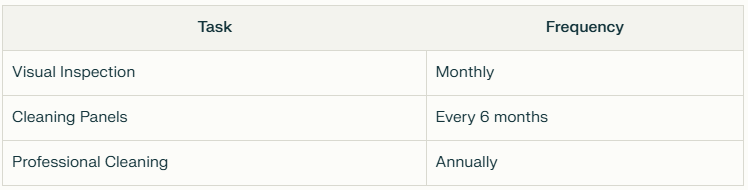
- Frequency: Clean your panels at least twice a year or more often if you live in a dusty area.
Cleaning Checklist
3. Trimming Surrounding Vegetation
Shading is one of the most common causes of reduced solar output. Trees and nearby vegetation can gradually block sunlight and lower energy production if not properly managed.
Regular trimming helps ensure that panels receive consistent sunlight throughout the day, maintaining stable system performance and energy yield.
4. Monitoring Energy Output
Modern solar PV systems often include monitoring tools that allow real-time performance tracking. These tools help system owners quickly identify unexpected drops in energy production.
A sudden decline in output may indicate issues such as shading, dirt accumulation, or technical faults. Early detection through monitoring helps reduce downtime and maintain optimal efficiency.
5. Checking for Pests and Environmental Impact
In some installations, birds and small animals may nest near or under solar panels, potentially causing wiring damage or blocking airflow.
Regular inspections help detect early signs of pest activity, allowing preventive measures such as protective barriers or mesh guards to be installed when necessary.
6. Professional Inspections
In some installations, birds and small animals may nest near or under solar panels, potentially causing wiring damage or blocking airflow.
Regular inspections help detect early signs of pest activity, allowing preventive measures such as protective barriers or mesh guards to be installed when necessary.