


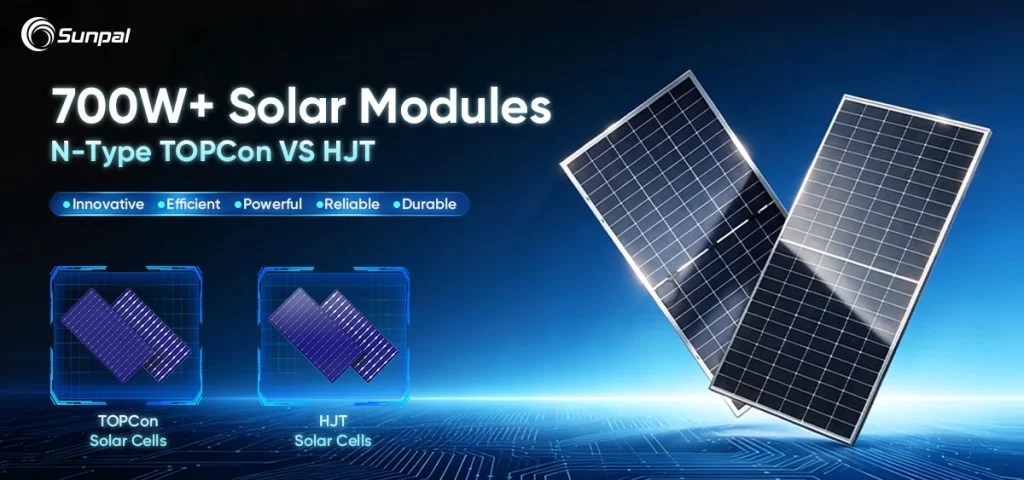
Serão os painéis solares de 700W+ o futuro dos projetos solares de grande escala?
Durante anos, os fabricantes de painéis solares concorreram aumentando de forma constante a eficiência dos módulos e a potência de saída. Hoje, essa concorrência entrou numa nova fase. Os painéis solares de alta potência com classificação de 700 W e acima já não são produtos experimentais — estão a tornar-se uma escolha prática para parques solares de grande escala, sistemas comerciais em coberturas e outros projetos onde maximizar o rendimento energético e reduzir os custos de instalação é essencial.
A transição está a ser impulsionada por várias tendências de mercado. O aumento dos preços dos terrenos, o encarecimento da mão de obra e a pressão para reduzir o custo nivelado da eletricidade (LCOE) têm incentivado os promotores a procurar módulos maiores e mais eficientes. Ao mesmo tempo, os avanços nas tecnologias N-Type TOPCon e HJT (Heterojunção) permitiram aos fabricantes fornecer maiores potências de saída sem comprometer a fiabilidade a longo prazo.
Comparados com os módulos convencionais de 550W ou 600W, os painéis solares de 700W+ podem reduzir o número total de módulos necessários para um projeto, simplificar a instalação e diminuir os custos do balanço do sistema (BOS). Estas vantagens tornam-nos cada vez mais atraentes para empreiteiros EPC, distribuidores e investidores que planeiam grandes instalações comerciais e de escala de utilidade pública.
Neste guia, vamos explicar como os painéis solares de 700W+ alcançam o seu melhor desempenho, comparar as mais recentes tecnologias N-Type TOPCon e HJT, examinar as especificações típicas de um painel solar de 700W e discutir como escolher o módulo certo para o seu próximo projeto.
Porque é que os painéis solares de 700W+ se estão a tornar o novo padrão da indústria?
A indústria fotovoltaica tem registado um progresso tecnológico notável ao longo da última década. As potências dos módulos que antes tinham uma média de Os 250W têm aumentado de forma constante para 400W, 550W e agora ultrapassam os 700W para os produtos de gama alta.
Esta evolução não se cinge simplesmente à produção de módulos de maiores dimensões — reflete melhorias em várias áreas do design de células solares, processos de fabrico e otimização de sistemas.
Os painéis solares de 700W de hoje combinam tipicamente várias tecnologias avançadas, incluindo:
- Bolachas de silício de grande formato
- Interligação de células de alta densidade
- designs Multi-Busbar (MBB)
- Arquitetura de meia-célula
- construção vidro-vidro bifacial
- Células solares do tipo N
- Materiais de encapsulamento avançados
Em conjunto, estas inovações permitem aos fabricantes aumentar a eficiência dos módulos, mantendo uma excelente resistência mecânica e durabilidade a longo prazo.
Para os promotores de projetos, os benefícios vão além de uma maior potência.
A instalação de menos módulos de alta potência pode reduzir significativamente:
- Estruturas de montagem
- Comprimento do cabo
- Caixas combinadoras de CC
- Mão de obra de instalação
- Custos de transporte e logística
- Despesas gerais BOS
Estas poupanças tornam-se cada vez mais importantes à medida que as capacidades dos projetos crescem de vários megawatts para centenas de megawatts.
Evolução da Potência dos Painéis Solares Comerciais (2018–2025)
De Módulos P-Type PERC para Tecnologia N-Type TOPCon & HJT de Alta Potência
Impacto na Indústria: Uma maior potência do módulo permite uma maior densidade energética e custos mais baixos de balanço de sistema (BOS) para projetos solares comerciais e de escala de utilidade pública.
Para Além da Maior Potência: Porque é que a Densidade de Potência Importa
Muitos compradores assumem que selecionar o módulo com a potência mais elevada garante automaticamente o melhor desempenho do projeto. Na realidade, profissionais experientes em energia solar avaliam vários fatores em conjunto.
Densidade de potência — a quantidade de eletricidade gerada por unidade de área de instalação — é frequentemente mais importante do que a própria potência nominal do módulo.
Uma maior densidade de potência permite aos proprietários de projetos:
- Gerar mais eletricidade a partir de espaço de telhado limitado
- Aumentar a produção anual de energia
- Melhorar o retorno do investimento
- Reduzir o custo por quilowatt-hora ao longo da vida útil do sistema
Para telhados comerciais, onde a área de instalação disponível é limitada, maximizar a densidade de potência pode aumentar significativamente a capacidade total do sistema sem expandir a área ocupada.
Para projetos à escala de utilidade pública, menos módulos significam também menos componentes de fixação e um tempo de instalação reduzido, ajudando os empreiteiros EPC a concluir os projetos de forma mais eficiente.
Compreender as Especificações de um Painel Solar de 700W
Ao comparar diferentes fabricantes, os compradores devem olhar além da potência anunciada. A forma mais fiável de avaliar um módulo é analisar as suas especificações técnicas completas.
Os parâmetros principais incluem:
| Especificação | Porque é que é importante |
| Potência Nominal (Pmax) | Potência máxima de saída sob Condições de Ensaio Padrão (STC). |
| Eficiência do Módulo | Indica a eficácia com que a luz solar é convertida em eletricidade. Uma maior eficiência melhora a densidade energética. |
| Tecnologia de Celular | N-Type TOPCon, HJT ou outras tecnologias avançadas influenciam o desempenho e a degradação. |
| Tensão de Circuito Aberto (Voc) | Importante para o design do sistema e compatibilidade do inversor. |
| Corrente de Curto-Circuito (Isc) | Afeta o dimensionamento das strings e o projeto elétrico. |
| Coeficiente de temperatura | Determina a diminuição do desempenho à medida que as temperaturas de funcionamento aumentam. Valores mais baixos são preferíveis. |
| Fator bifacial | Indica a capacidade do módulo de gerar energia adicional a partir da luz refletida. |
| Capacidade de Carga Mecânica | Mede a resistência ao vento, à neve e a outras pressões ambientais. |
| Garantia do Produto | Reflete a qualidade e fiabilidade de fabrico. |
| Garantia de desempenho | Garante a potência de saída a longo prazo durante a vida útil do módulo. |
Em vez de se focarem numa única especificação, os compradores experientes comparam estas características em conjunto para determinar o valor global do módulo.
O que torna um painel solar de 700W de alta qualidade?
À medida que mais fabricantes introduzem painéis solares de 700W+, a qualidade dos produtos pode variar significativamente.
Um módulo premium de alta potência deve combinar alta eficiência com fiabilidade a longo prazo. Várias características merecem atenção particular:
Tecnologia Celular Avançada
A maioria dos principais módulos utiliza agora células solares do tipo N, que geralmente oferecem menor degradação, melhor desempenho em termos de temperatura e maior rendimento energético do que os designs tradicionais do tipo P.
Geração de Energia Bifacial
Muitos módulos de 700W apresentam uma construção bifacial de vidro duplo, permitindo que a face posterior do painel capte a luz solar refletida a partir de superfícies como betão, areia ou neve. Dependendo das condições de instalação, isto pode proporcionar ganhos significativos na produção total de energia.
Perdas a Temperatura Inferior
Os painéis solares perdem naturalmente eficiência à medida que as temperaturas aumentam. Os módulos com um coeficiente de temperatura mais baixo mantêm um desempenho superior em climas quentes, tornando-os bem adequados para regiões com radiação solar intensa.
Fiabilidade a longo prazo
Os fabricantes de alta qualidade apoiam os seus produtos com garantias alargadas de produto e desempenho, demonstrando confiança na durabilidade dos módulos ao longo de décadas de funcionamento. Características como materiais de encapsulamento robustos, interligação avançada de células e um controlo de qualidade rigoroso contribuem ainda mais para uma longa vida útil.
Para os compradores que avaliam as especificações de painéis solares de 700 W, considerar estes indicadores de desempenho juntamente com a potência oferece uma imagem mais completa do valor a longo prazo.
O que distingue as células solares do tipo N das do tipo P?
Durante mais de uma década, a tecnologia PERC do tipo P dominou o mercado fotovoltaico global, graças ao seu processo de fabrico maduro e preços competitivos. No entanto, com o aumento da procura por maior eficiência e custos de energia ao longo da vida úteis mais baixos, a indústria tem transitado rapidamente para tecnologias de células solares do tipo N, particularmente TOPCon e HJT (Heterojunção).
A mudança não é simplesmente uma tendência de marketing. As células do tipo N abordam várias limitações físicas associadas ao silício do tipo P tradicional, permitindo aos fabricantes produzir painéis solares de alta eficiência com maior rendimento energético a longo prazo e melhor durabilidade.
Porque é que a indústria está a transitar para o tipo N?
Ao contrário das células do tipo P, o silício do tipo N utiliza fósforo como o dopante principal, o que o torna menos suscetível à degradação induzida pela luz (LID). Como resultado, os módulos do tipo N retêm uma maior percentagem da sua potência de saída original ao longo da sua vida útil.
Outras vantagens incluem:
- Taxas de degradação anual mais baixas
- Melhor desempenho com pouca luz de manhã, ao fim da tarde e em condições de céu nublado
- Comportamento de temperatura melhorado em climas quentes
- Maior eficiência de conversão
- Melhor compatibilidade com designs de módulos bifaciais
Para projetos comerciais e de escala de utilidade pública previstos para operar durante 25 a 30 anos, estas melhorias de desempenho podem traduzir-se num rendimento energético vitalício significativamente superior.
De PERC para TOPCon e HJT
O roteiro tecnológico da indústria tem evoluído rapidamente:
| Tecnologia | Eficiência Típica do Módulo | Posição no Mercado |
| PERC do Tipo P | 20–22% | Tecnologia madura, quota de mercado em declínio gradual |
| Tipo N TOPCon | 22–24%+ | Solução de alta eficiência dominante |
| N-Type HJT | 23–25%+ | Solução de alta qualidade e alto desempenho |
| Células BC e Tandem | 25%+ (emergente) | Tecnologias de nova geração em desenvolvimento |
Em vez de substituírem a tecnologia PERC de um dia para o outro, a TOPCon e a HJT estão a tornar-se gradualmente as opções preferidas para projetos em que o desempenho a longo prazo e a produção de energia justificam o investimento.
Evolução das Tecnologias de Células Solares (2016–2026)
De PERC para TOPCon, HJT, BC e Células Solares em Tandem de Próxima Geração
PERC do Tipo P
A tecnologia de passivação da superfície posterior melhorou a eficiência de conversão e substituiu as células BSF tradicionais.
PERC Avançado
Wafers grandes, células meio cortadas e tecnologia multi-barramentos impulsionaram os módulos comerciais para além dos 500W.
Tipo N TOPCon
A tecnologia de contacto passivado por óxido de túnel tornou-se a principal substituta da PERC.
N-Type HJT
A tecnologia de silício híbrido proporciona maior eficiência e melhor desempenho térmico.
Contacto Traseiro
A arquitetura de contactos traseiros reduz as perdas por sombreamento e aumenta a densidade energética.
Tanden de Perovskite-Silício
As estruturas em tandem combinam várias camadas absorventes para superar os limites tradicionais do silício.
Painéis Solares N-Type TOPCon vs HJT: Qual é a Diferença?
Uma das perguntas mais comuns entre os compradores hoje em dia é se os painéis solares N-Type TOPCon ou HJT oferecem o melhor investimento.
A resposta depende das prioridades do projeto. Ambas as tecnologias representam melhorias significativas em relação aos módulos PERC convencionais, mas cada uma tem pontos fortes únicos.
Tecnologia de Fabrico
Painéis solares TOPCon
TOPCon significa Tunnel Oxide Passivated Contact.
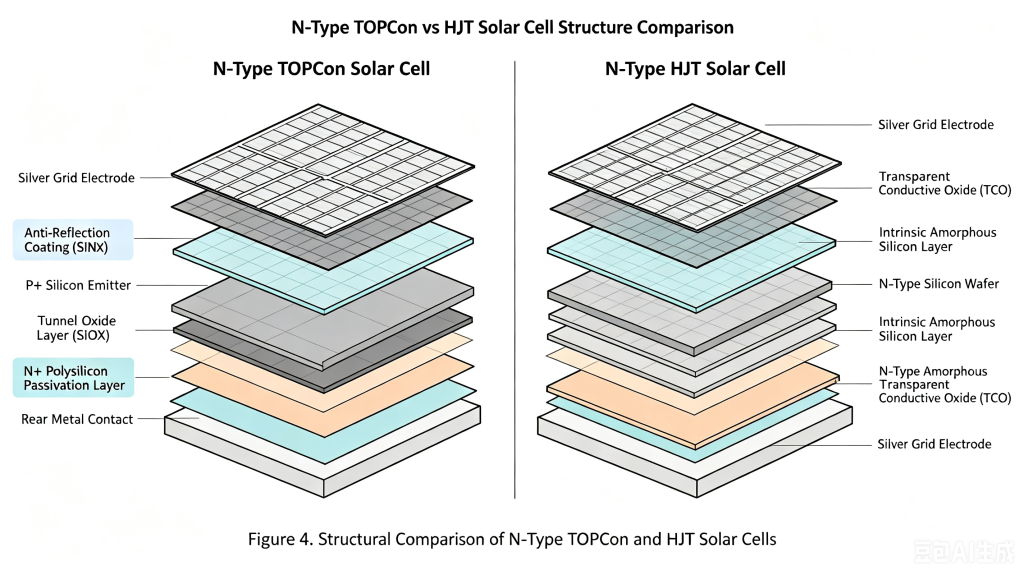
Melhora as células de silício cristalino convencionais ao adicionar uma camada ultrafina de óxido túnel e uma camada de passivação de silício policristalino dopado na parte traseira da célula. Esta estrutura reduz a recombinação de portadores, permitindo que mais eletrões contribuam para a geração de eletricidade.
Uma das razões pelas quais a tecnologia TOPCon tem sido amplamente adotada é que os fabricantes podem atualizar muitas das linhas de produção PERC existentes, em vez de construírem fábricas totalmente novas. Isto ajuda a reduzir os custos de fabrico, ao mesmo tempo que aumenta a capacidade de produção.
Hoje, a tecnologia TOPCon tornou-se uma das tecnologias do tipo N mais produzidas na indústria solar global.
Painéis solares HJT
A tecnologia HJT, ou Heterojunção (Heterojunction Technology), combina pastilhas de silício cristalino com camadas ultrafinas de silício amorfo.
Esta estrutura de célula híbrida oferece várias vantagens de desempenho:
- Maior eficiência de conversão
- Coeficiente de temperatura mais baixo
- Melhor produção de energia bifacial
- Degradação reduzida
- Excelente desempenho com pouca luz
Como ofabrico de HJT requer equipamento e processos de produção diferentes, o investimento de capital é geralmente superior ao da TOPCon. No entanto, muitos fabricantes continuam a expandir a produção de HJT devido ao seu potencial de eficiência a longo prazo.
Comparação de Desempenho
O quadro seguinte resume as principais diferenças entre as duas tecnologias.
| Funcionalidade | Tipo N TOPCon | N-Type HJT |
| Eficiência da célula | Excelente | Excelente |
| Eficiência do Módulo | Elevado | Muito Alto |
| Desempenho Térmico | Muito bom | Excelente |
| Desempenho com Pouca Luz | Muito bom | Excelente |
| Ganho Bifacial | Elevado | Muito Alto |
| Degradação Anual | Baixa | Muito Baixo |
| Custo de fabrico | Mais baixo | Mais alto |
| Maturidade de Produção | Muito maduro | Em crescimento rápido |
| Aplicações Típicas | Comercial, utilitário | Projetos Comerciais, de Serviços Públicos e de Alta Temperatura Premium |
Embora a tecnologia HJT geralmente lidere em desempenho técnico, a TOPCon oferece um equilíbrio atrativo entre eficiência, maturidade de fabrico e custo, tornando-se uma escolha popular para muitas instalações de grande escala.
O desempenho térmico importa mais do que muitos compradores imaginam
Os painéis solares raramente operam em condições laboratoriais.
Em tardes soalheiras de verão, as temperaturas dos módulos podem exceder 60°C (140°F), fazendo com que a potência de saída diminua. É por esta razão que o coeficiente de temperatura é uma especificação importante.
Os módulos HJT normalmente demonstram um coeficiente de temperatura mais baixo do que os módulos TOPCon, o que significa que perdem menos potência à medida que as temperaturas aumentam.
Esta característica torna a HJT especialmente atrativa para projetos localizados em:
- desertos do Médio Oriente
- Austrália
- Europa do Sul
- América Latina
- Sudeste Asiático
- África
Ao longo de décadas de funcionamento, um melhor desempenho térmico pode aumentar significativamente a produção total de energia.
Desempenho bifacial
Outra vantagem importante de ambas as tecnologias é a sua compatibilidade com designs de módulos bifaciais.
Ao contrário dos módulos monofaciais convencionais, os painéis solares bifaciais geram eletricidade tanto a partir da superfície frontal quanto da traseira.
Dependendo da refletividade do solo (albedo), da altura de instalação e da configuração de montagem, poderá ser obtida uma geração de energia adicional através da luz solar refletida.
Os ambientes de instalação comuns incluem:
- Seixo branco
- Areia do deserto
- Regiões cobertas de neve
- Superfícies de betão
- Plataformas solares flutuantes
Como as células HJT apresentam tipicamente um fator bifacial mais elevado, produzem frequentemente maiores ganhos de energia na face posterior em condições favoráveis.
Rendimento Energético Estimado sob Diferentes Condições de Funcionamento
Comparação Relativa do Rendimento Energético Anual: PERC vs N-Type TOPCon vs HJT
Referência Padrão
Menor degradação
& Desempenho Bifacial
Temperatura moderada
Irradiação convencional
Valor de referência do PERC = 100%
Regiões desérticas e tropicais
operação do módulo a >60°C
A vantagem do HJT aumenta
Superfícies reflectoras
Deserto / neve / telhado
Maior ganho bifacial
Fiabilidade a Longo Prazo e Degradação
Ao avaliar as especificações de um painel solar de 700W, a potência de saída inicial é apenas parte da equação.
Um módulo que gera um pouco mais de eletricidade hoje, mas se degrada mais rapidamente ao longo dos próximos 30 anos, pode produzir menos energia ao longo da vida útil do que uma alternativa mais estável.
As tecnologias do tipo N foram concebidas para minimizar mecanismos de degradação comuns, tais como:
- Degradação Induzida pela Luz
- Degradação Induzida por Luz e Temperatura Elevada (LeTID)
- Degradação Induzida por Potencial (PID)
Tanto o TOPCon como o HJT superam geralmente os módulos PERC tradicionais nestas áreas.
Para os investidores que avaliam o custo nivelado da eletricidade (LCOE), a estabilidade a longo prazo tem frequentemente um impacto financeiro maior do que pequenas diferenças na potência nominal.
Que tecnologia é a adequada para o seu projeto?
Em vez de perguntarem que tecnologia é universalmente "melhor", os compradores devem determinar qual a solução que melhor se adequa aos objetivos do seu projeto.
Escolha TOPCon se precisar de:
- Investimento inicial competitivo
- Maturidade de fabrico comprovada
- Grande implementação comercial
- Excelente eficiência com excelente relação custo-benefício
- Disponibilidade de abastecimento fiável
A TOPCon tornou-se a opção dominante para muitos projetos comerciais e de escala de utilidade pública porque equilibra desempenho e acessibilidade.
Escolha HJT Se Precisar:
- Rendimento energético máximo
- Eficiência superior
- Desempenho superior a altas temperaturas
- Maior ganho bifacial
- Reduzir a degradação a longo prazo
- Projetos em que a maximização da produção de eletricidade ao longo da vida útil é a principal prioridade
A tecnologia HJT é particularmente adequada para parques solares à escala de utilidade pública, regiões de alta irradiação e instalações onde cada ponto percentual de geração adicional de energia contribui para a melhoria da viabilidade económica do projeto.
Guia de Decisão
| Tipo de Projeto | Tecnologia Recomendada |
| Telhados Residenciais | TOPCon ou HJT (dependente do espaço) |
| Coberturas Comerciais | TOPCon |
| Instalações Industriais | TOPCon / HJT |
| Parques Solares de Grande Dimensão | HJT ou TOPCon Premium |
| Instalações no Deserto | HJT |
| Centrais Solares Flutuantes | HJT |
| Ambientes de Elevado Albedo | HJT |
A escolha depende, em última análise, do orçamento, da escala do projeto, do clima local, da área de instalação disponível, dos requisitos de financiamento e do retorno do investimento esperado.
Onde é que os painéis solares de 700W+ são mais bem aplicados?
O rápido desenvolvimento de painéis solares de 700W+ está a mudar a forma como os projetos solares são concebidos. Uma maior potência dos módulos não é apenas benéfica para aumentar a geração de eletricidade — também melhora a economia do projeto, reduzindo a complexidade da instalação e diminuindo os custos globais do sistema.
Para aplicações solares de grande escala, cada watt adicional gerado por um único módulo pode influenciar a utilização dos terrenos, os requisitos de transporte, a eficiência da mão de obra e o custo nivelado da eletricidade (LCOE) final.
Hoje em dia, os módulos de alta potência baseados na tecnologia N-Type TOPCon e HJT são cada vez mais adotados em várias aplicações, incluindo parques solares de grande escala, coberturas comerciais e industriais, projetos fotovoltaicos agrícolas e instalações com espaço limitado.
Aplicações de Paineis Solares de 700W+ em Diferentes Projetos Solares
Centrais Solares Fotovoltaicas de Grande Escala
Os projetos à escala de serviços públicos contam-se entre os maiores beneficiários de módulos solares de alta potência.
Grandes parques solares tipicamente exigem milhares ou até milhões de módulos. Aumentar a potência dos módulos de 550W para 700W+ significa que são necessários menos painéis para atingir a mesma capacidade instalada.
Por exemplo:
Um projeto solar de 100MW:
- A utilização de módulos de 550W requer aproximadamente 181.800 painéis
- A utilização de módulos de 750W requer aproximadamente 133.300 painéis
Esta redução pode simplificar:
- Transporte de módulos
- Instalação da estrutura de montagem
- cablagem CC
- Operações de manutenção
Para os promotores de serviços públicos, estas melhorias podem reduzir significativamente o tempo de construção e melhorar a rentabilidade do projeto.
Coberturas solares comerciais e industriais
Os sistemas solares comerciais enfrentam um desafio diferente em comparação com os projetos de utilidade pública: espaço de instalação limitado.
Fábricas, armazéns, centros logísticos e edifícios comerciais têm frequentemente áreas de cobertura grandes mas finitas. O aumento da potência dos módulos permite às empresas instalar mais capacidade sem expandir a área disponível.
Por exemplo, a substituição de módulos tradicionais de 450W por módulos de 700W+ pode ajudar as empresas a:
- Aumentar a capacidade instalada por telhado
- Gerar mais eletricidade renovável
- Reduzir a dependência da rede elétrica
- Melhorar a poupança nos custos de energia
Isto torna os painéis solares de alta potência particularmente atraentes para:
- Instalações de fabrico
- Centros de dados
- Centros comerciais
- Edifícios agrícolas
- Parques industriais
Aplicações Agrícolas e Flutuantes de Energia Solar
Os projetos agrivoltaicos e solares flutuantes também beneficiam de módulos de alta eficiência.
Agrivoltaica
Os sistemas agrivoltaicos exigem uma otimização cuidadosa dos solos, uma vez que a produção de eletricidade deve coexistir com as atividades agrícolas.
Os módulos de maior potência podem ajudar a maximizar a produção de energia, reduzindo simultaneamente a pegada física da instalação solar.
Solar Flutuante
Os projetos solares flutuantes enfrentam desafios únicos:
- Espaço disponível limitado
- Maior complexidade de instalação
- Exposição ambiental
Os módulos bifaciais de alta potência podem melhorar o desempenho do projeto ao capturar tanto a luz solar direta como a luz refletida a partir da superfície da água.
Para estas aplicações, os painéis solares bifaciais HJT são particularmente atraentes devido ao seu forte desempenho em condições de luz fraca e à sua elevada capacidade bifacial.
Como os painéis solares de 700W+ reduzem os custos totais do sistema
Um equívoco comum é o de que os módulos de maior potência apenas aumentam a produção de eletricidade. Na realidade, também reduzem vários custos ocultos do projeto.
O custo total de um sistema solar inclui muito mais do que os módulos.
Inclui:
- Estruturas de montagem
- Componentes elétricos
- Trabalho
- Transporte
- Equipamento de instalação
- Operações e manutenção
É por esta razão que os compradores profissionais avaliam os módulos solares com base na economia total do sistema e não apenas no preço do módulo.
1. Redução dos Custos do Sistema (BOS)
Os custos do balanço do sistema representam todos os componentes externos aos painéis solares.
Os módulos de maior potência reduzem os custos de BOS porque são necessárias menos unidades.
As poupanças potenciais incluem:
- Menos calhas de fixação
- Menos grampos
- Menos cablagem
- Menos conectores
- Redução do trabalho de instalação
Para grandes projetos, estas poupanças podem representar uma percentagem significativa do investimento total.
2. Tempo de Instalação Reduzido
Os módulos solares de grande formato permitem que as equipas de instalação concluam os projetos mais rapidamente.
Menos módulos significam:
- Menos trabalho de levantamento
- Colocação de módulos mais rápida
- Redução das necessidades de mão de obra
Para os empreiteiros EPC que trabalham com cronogramas de projeto estritos, a eficiência da construção pode influenciar diretamente a rentabilidade.
3. Utilização de Solos Melhorada
A disponibilidade de terrenos está a tornar-se cada vez mais importante em muitas regiões.
Uma maior densidade de potência permite aos promotores gerar mais eletricidade a partir da mesma área.
Isto é particularmente valioso em:
- Europa, onde os custos dos terrenos são elevados
- Regiões insulares com espaço limitado
- Zonas industriais com áreas restritas
- ambientes comerciais urbanos
Como os Módulos de 700W+ Melhoram
Economia de Projetos Solares
Melhorias típicas em comparação com os módulos convencionais de escala de utilidade pública de 550W
| Comparação | Módulo de 550W | Módulo 730–750W |
|---|---|---|
| Potência típica do módulo | 550W | 730–750W |
| Projeto de 100MW | ≈181.800 Módulos | ≈133.300–137.000 |
| Eficiência do Módulo | 21–22% | 23–24.5% |
| Tecnologia de Celular | PERC / Early TOPCon | N-Type TOPCon / HJT |
| Melhor Aplicação | Comercial | Grandes C&I e Serviços Públicos |
Como Escolher o Painel Solar de 700W Certo para o Seu Projeto
A seleção de um painel solar de alta potência exige mais do que escolher a potência mais elevada disponível.
Os compradores profissionais devem avaliar vários fatores.
1. Considerar a Eficiência do Módulo
Um módulo de 700W com maior eficiência consegue gerar mais eletricidade a partir de um espaço de instalação limitado.
Os fatores importantes incluem:
- Tecnologia de células
- Dimensões do módulo
- Eficiência de conversão de energia
Para coberturas comerciais e projetos com espaço limitado, a eficiência é frequentemente mais importante do que a potência absoluta.
2. Avaliar as Condições Climáticas
As condições ambientais afetam diretamente o desempenho solar.
Para regiões quentes, os compradores devem priorizar módulos com:
- Coeficiente de temperatura mais baixo
- Forte desempenho térmico
- Alta fiabilidade
Para regiões com neve, areia ou superfícies altamente refletivas, os módulos bifaciais podem proporcionar ganhos energéticos adicionais.
3. Rever as Taxas de Degradação e a Garantia
Um projeto solar é um investimento a longo prazo.
Ao comparar fabricantes, analise:
- Período de garantia do produto
- Garantia de desempenho linear
- taxa de degradação anual
- Normas de certificação
Os módulos Premium do tipo N oferecem, normalmente, um melhor desempenho energético ao longo da vida útil, em comparação com tecnologias mais antigas.
4. Escolha um Fabricante Fiável de Módulos Solares
O rápido crescimento dos módulos de 700W+ significa que os compradores têm mais opções do que nunca.
No entanto, nem todos os painéis de alta potência oferecem a mesma qualidade.
Um fabricante fiável deve fornecer:
- Instalações de produção avançadas
- Rigoroso controlo de qualidade
- Certificações internacionais
- Capacidade de fornecimento global estável
- Apoio técnico para o design do projeto
Como fornecedor profissional de módulos solares, a Sunpal Solar concentra-se no desenvolvimento de soluções do tipo N de alta eficiência, incluindo módulos HJT avançados concebidos para aplicações comerciais e de escala de serviços públicos.
Para os clientes que procuram a máxima produção de energia e desempenho a longo prazo, os produtos da Sunpal Painéis solares HJT de 730W - 750W fornecer uma solução de alta potência que combina tecnologia avançada de células, excelente desempenho térmico e durabilidade fiável.
Perguntas Frequentes Sobre Painéis Solares de 700W+
Q1. O que é um painel solar de 700W?
A: Um painel solar de 700W é um módulo fotovoltaico de alta potência capaz de produzir aproximadamente 700 watts de eletricidade sob condições de teste padrão (STC). Estes módulos utilizam tipicamente tecnologias avançadas do tipo N, pastilhas de grande formato e designs de células de alta eficiência.
Q2. Os painéis solares de 700W são melhores do que os de 600W?
A: Em muitas aplicações de grande escala, sim. Os módulos de maior potência podem reduzir o número de painéis necessários, diminuir os custos BOS e melhorar a eficiência da instalação. No entanto, os requisitos do projeto, tais como o espaço disponível, a compatibilidade do inversor e o orçamento, também devem ser considerados.
Q3. Quais são as especificações típicas de um painel solar de 700W?
A: As especificações típicas incluem:
- Potência de saída: 700W–750W
- Tecnologia de células: N-Type TOPCon ou HJT
- Eficiência: aproximadamente 22%–25%
- Capacidade bifacial: disponível em muitos modelos
- Construção vidro-vidro: comum para módulos premium
- Garantia de desempenho a longo prazo
Q4. O HJT é melhor do que o TOPCon?
A: Ambas as tecnologias oferecem excelente desempenho. A TOPCon proporciona uma forte eficiência com fabrico maduro e custos competitivos. A HJT geralmente proporciona maior eficiência, melhor desempenho em termos de temperatura, maior ganho bifacial e menor degradação. A melhor escolha depende dos requisitos do projeto e das prioridades de investimento.
Q5. Podem ser utilizados painéis solares de 700W para sistemas residenciais?
A: Tecnicamente sim, mas são primariamente concebidos para projetos maiores devido ao seu tamanho e peso.
Os clientes residenciais devem considerar as dimensões do telhado, a capacidade estrutural e a compatibilidade do inversor antes de selecionar módulos de grande formato.
Q6. Vale a pena investir em painéis solares bifaciais de 700W?
A: Para projetos com superfícies refletivas ou condições de montagem otimizadas, os módulos bifaciais podem proporcionar geração de energia adicional e melhorar o retorno dos projetos.
Conclusão: O Futuro dos Módulos Solares de Alta Potência
A indústria solar está a entrar numa nova era em que a potência dos módulos, a eficiência e o desempenho ao longo da vida se estão a tornar cada vez mais importantes.
O surgimento de painéis solares de 700W+ representa mais do que um simples aumento na potência. Reflete uma transição mais ampla para um design de sistemas solares mais inteligente, custos de instalação mais baixos e uma melhor economia energética a longo prazo.
Entre as tecnologias avançadas atuais:
- O N-Type TOPCon oferece um excelente equilíbrio entre eficiência, custo e escalabilidade de fabrico.
- Os painéis solares HJT oferecem um desempenho superior com excelentes características de temperatura, capacidade bifacial e fiabilidade a longo prazo.
Para empresas, programadores e profissionais da energia solar que planeiam futuros projetos, a escolha da tecnologia certa de módulos de alta potência pode influenciar diretamente o desempenho do sistema e o retorno do investimento.
À medida que a procura pelos painéis solares mais potentes cresce em 2025 e nos anos seguintes, as soluções avançadas de 700W–750W continuarão a desempenhar um papel fundamental na construção de sistemas de energia solar mais eficientes e económicos. Explore as soluções avançadas de painéis solares HJT de 730W e 750W da Sunpal para descobrir como os módulos de alta potência de nova geração podem otimizar o seu projeto solar.