


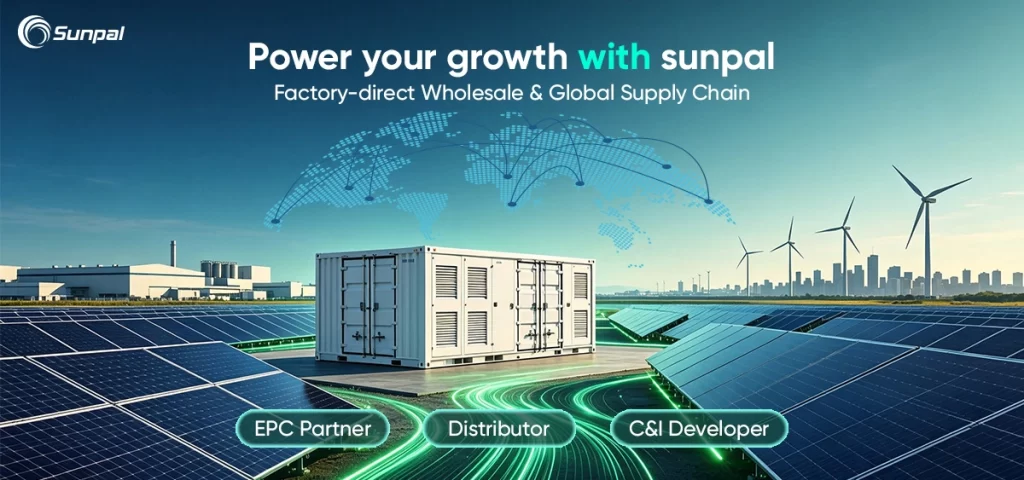
Da die globalen Märkte für Solar- und Energiespeicher ausreifen und wettbewerbsfähiger werden, blicken B2B-Käufer bei der Bewertung von Lieferanten über den reinen Produktpreis hinaus. Für Distributoren, Großhändler, Installateure und EPC-Auftragnehmer gewinnen Faktoren wie Beschaffungseffizienz, Versorgungssicherheit, Logistik, Systemkompatibilität und langfristiger Projektwert bei der Bewertung zunehmend an Bedeutung B2B-Solarlieferanten.
Vor diesem Hintergrund hat Sunpal Solar ein B2B-Geschäftsmodell entwickelt, das darauf ausgerichtet ist, Partner über den bloßen Kauf einzelner Produkte hinaus zu unterstützen. Durch die Kombination eines integrierten Solar- und Energiespeicherportfolios mit Fertigungskapazitäten, flexiblen Kooperationsmodellen und technischem Support will Sunpal globalen Partnern helfen, effizientere und skalierbare Solargeschäfte in den Bereichen Wohnen, Gewerbe und Industrie aufzubauen.
Vom Solarlieferanten zum B2B-Geschäftspartner
Für Distributoren, Großhändler, Installateure und EPC-Auftragnehmer ist der Kauf von Solaranlagen nur ein Teil des Geschäftsprozesses. Die Verwaltung mehrerer Lieferanten für Module, Batterien, Wechselrichter und Energiesichersysteme kann den Kommunikations- und Koordinationsaufwand für jedes Projekt erhöhen.
Sunpals B2B-Solarpartnerschaft Das Modell ist darauf ausgelegt, einen koordinierteren Ansatz für die Beschaffung und Projektentwicklung zu bieten. Das Programm kombiniert Produktversorgung mit flexiblen Kooperationsmodellen, Fertigungsressourcen, technischer Unterstützung und partnerorientierten Dienstleistungen, sodass Kunden das Maß an Unterstützung auswählen können, das zu ihrem Geschäftsmodell passt.
Anstatt jede Bestellung als isolierte Transaktion zu behandeln, ist der Ansatz darauf ausgelegt, wiederkehrende Beschaffung, projektbasierte Zusammenarbeit, Marktexpansion und längerfristige Kanalentwicklung zu unterstützen. B2B-Kunden verfügen über eine koordiniertere Möglichkeit, Solar- und Energiespeicherprodukte zu beschaffen und einzusetzen.
Integriertes Solar- und Energiespeicherportfolio
Das Portfolio von Sunpal umfasst die Kernausrüstung, die für eine Reihe von Solar- und Energiespeicheranwendungen erforderlich ist, einschließlich N-Typ TOPCon Solarmodule, LiFePO₄-Batterien, Hybrid- und Strangwechselrichter, C&I-Energiesichersysteme und containerbasierte ESS-Lösungen.
Dieses Portfolio erstreckt sich über verschiedene Systemgrößen, von verteilten und kommerziellen Anlagen bis hin zu größeren Energiespeicherprojekten, und bietet B2B-Partnern eine größere Flexibilität bei der Entwicklung Gewerbliche Solarlösungen für verschiedene Märkte und Anwendungen.
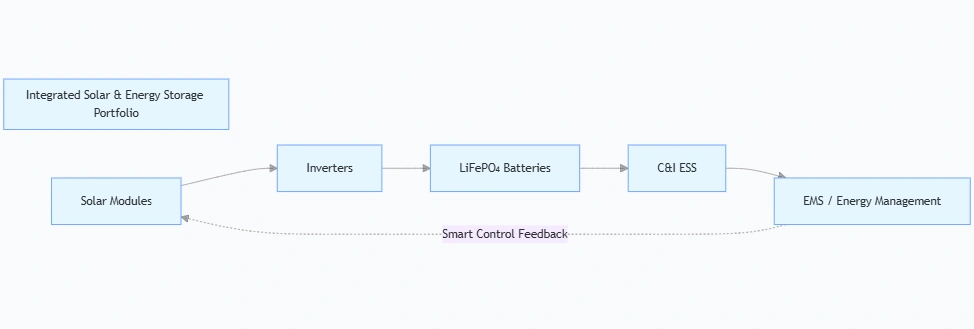
Übersicht über das geschlossene EMS-System:
Hocheffiziente N-Typ TOPCon Solarmodule
Sunpal bietet hocheffiziente N-Typ-TOPCon-Photovoltaikmodule in mehreren Leistungsklassen, einschließlich 590W, 630W und 720W, je nach Produktreihe und Marktanforderungen.
Die TOPCon-Technologie kombiniert einen hohen Wirkungsgrad mit geringen Degradationseigenschaften. Ausgewählte bifaziale Module können unter geeigneten Installationsbedingungen zudem zusätzliche Einstrahlung auf der Rückseite nutzen, was den potenziellen Energieertrag bei Projekten mit günstiger Bodenreflexion und Systemauslegung erhöht.
Gewerbliche und industrielle Energiespeichersysteme
Sunpals C&I-Energiespeicher-Portfolio umfasst modulare kommerzielle Systeme und größere containerbasierte ESS-Lösungen, konzipiert für den flexiblen Einsatz in einer Vielzahl von kommerziellen und industriellen Anwendungen.
Zu den wichtigsten Anwendungsbereichen gehören:
- Lastspitzenkappung – Senkung des Netzbedarfs während Lastspitzen.
- Lastverschiebung – Verlagerung des Energieverbrauchs in günstigere Betriebszeiten.
- Tarifbasiertes Energiemanagement – Laden und Entladen gemäß den geltenden Stromtarifen.
- Solarer Eigenverbrauch – Speicherung von überschüssigem PV-Strom zur späteren Verwendung.
- Notstromversorgung – Unterstützung kritischer Lasten bei Netzausfällen.
- Mikronetz-Anwendungen – Unterstützung des integrierten Betriebs von PV, Speicher, Last und Netz.
Ausgewählte C&I-ESS-Konfigurationen bieten Flüssigkeitskühlungstechnologie für das Batterie-Wärmemanagement, die Aufrechterhaltung einer Temperaturdifferenz von ≤ 3 °C unter anwendbaren Systembedingungen. Dies unterstützt gleichmäßigere thermische Bedingungen und einen stabilen Batteriebetrieb beim Laden und Entladen.
Modulare LiFePO₄-Batterielösungen
Für verteilte und kommerzielle Anwendungen bietet Sunpal modulare LiFePO₄-Batteriesysteme, einschließlich Konfigurationen wie einer 51,2V 314Ah / ca. 16kWh Bodenbatterie.
Ausgewählte Konfigurationen verwenden Zellen der Güteklasse A, Unterstützung 6.000+ Zyklen unter festgelegten Bedingungen, und ermöglicht die Parallelschaltung mehrerer Einheiten zur Kapazitätserweiterung. Das modulare Design unterstützt verschiedene Systemkapazitäten und Installationsanforderungen.
Gewerbliche Hybrid-Wechselrichter
Das Portfolio an gewerblichen Hybrid-Wechselrichtern von Sunpal umfasst 10- bis 30-kW-Klasse-Lösungen für das integrierte PV-, Batterie-, Last- und Netzmanagement.
Je nach spezifischem Modell können mehrere Einheiten parallel geschaltet werden, um Systeme mit größerer Kapazität zu unterstützen. Zu den Hauptfunktionen können die Steuerung von Batterie-Lade- und Entladevorgängen, Notstromversorgung, Netzinteraktion und ein koordinierter Solar-plus-Speicher-Betrieb gehören.
Vertikale Integration & Lieferkettenvorteile
Für B2B-Kunden ist die Fertigungskapazität eng verbunden mit Beschaffungsplanung, Materialverfügbarkeit und Projektterminierung.
Gegründet im 2008, hat Sunpal ungefähr 500.000 Quadratmeter automatisierte Fertigungsanlagen verteilt auf drei Produktionsstandorte in Anhui und Jiangsu, China. Das Unternehmen berichtet außerdem von mehr als 40 Patente für Produktions- und Prozessoptimierung, wodurch laufende Verbesserungen der Fertigungseffizienz und Prozesslenkung unterstützt werden.
Für anwendbare Produktionslinien und Auftragskonfigurationen kann die Produktionskapazität etwa erreichen 30–50 MW pro Tag. Bestimmte Aufträge können einen Produktions- bis Versandzyklus von etwa erreichen 15 Tage, je nach Produktkonfiguration, Bestellvolumen, Produktionsplanung und Logistikanordnung.
Infografik zur Karten-Lieferkette:

Diese Fertigungsbasis unterstützt eine effizientere Beschaffung von Großmengen an Solaranlagen, wodurch Distributoren und EPC-Auftragnehmer in die Lage versetzt werden, die Produktbeschaffung, die Produktionsplanung und die Lieferanforderungen im Rahmen eines strukturierteren Beschaffungsprozesses zu koordinieren.
Für ausgewählte Großhandelsprodukte kann die typische Mindestbestellmenge für kommerzielle Wechselrichter bei 10 Einheiten für anwendbare Produkte, während internationale Handelsbedingungen, einschließlich EXW, FOB und CIF kann entsprechend den Bestell- und Zielvorgaben arrangiert werden.
Flexible B2B-Zusammenarbeit: Großhandel, Markenagentur & OEM/ODM
Verschiedene B2B-Kunden agieren unter unterschiedlichen Geschäftsmodellen, weshalb die Anforderungen an Beschaffung und Zusammenarbeit je nach Produkt, Markt und Projekt variieren können.
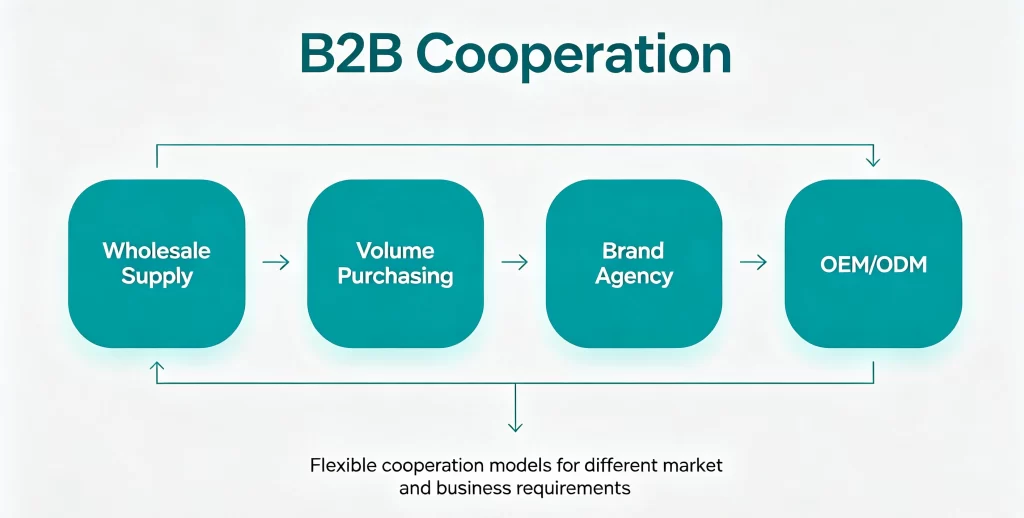
Sunpal unterstützt verschiedene Kooperationsmodelle, einschließlich Großhandel, Volumeneinkauf, Markenagentur und OEM/ODM, wodurch eine flexible Großhandelsprogramm für Solaranlagen für Partner mit unterschiedlichen Geschäfts- und Marktanforderungen.
B2B-Kooperationsmodelle:
Großhandel und Großeinkauf
Für Distributoren und Großhändler bietet die wiederkehrende oder volumenbasierte Beschaffung eine strukturierte Möglichkeit, den Lagerbestand an die lokale Nachfrage anzupassen.
Ausgewählte Produkte können entsprechend den Projektanforderungen, dem Bestellvolumen und den Bestandsplänen erworben werden, wodurch sowohl der laufende Vertrieb als auch die projektbezogene Beschaffung unterstützt werden.
Markenagentur
Für Unternehmen, die ein lokales Solargeschäft aufbauen oder expandieren möchten, bietet die Zusammenarbeit mit einer Markenagentur einen strukturierten Rahmen für den Produktvertrieb und die Markterschließung.
Es kann für regionale Vertriebspartner geeignet sein, die ein konsistentes Produktangebot in ihren Zielmärkten etablieren möchten.
OEM/ODM-Zusammenarbeit
Für qualifizierte Projekte kann die OEM/ODM-Zusammenarbeit kundenspezifische Markenbildung, Verpackungen, Produktkonfigurationen und andere marktspezifische Anforderungen unterstützen, sofern dies technisch und wirtschaftlich machbar ist.
Dieses Modell ist für Partner mit spezifischen Produkt-, Marken- oder regionalen Marktanforderungen konzipiert.
Gewerbe- und Industriespeicher: Von der Hardware zum geschäftlichen Nutzen
Für Gewerbe- und Industriekunden kann Energiespeicherung Wert schaffen, indem sie die Zeitlicher Verlauf, Auslastung und Kostenstruktur des Stromverbrauchs. Die oben skizzierten Anwendungen schlagen sich in unterschiedlichen kommerziellen Überlegungen nieder: Lastgattung und Lastverschiebung kann die Unterstützungsnachfrage und das Verbrauchsmanagement steuern; TOU-Strategien kann helfen, Energiekosten im Rahmen geltender Tarifstrukturen zu optimieren; Solarer Eigenverbrauch kann den Eigenverbrauch der PV-Anlage erhöhen; während Netzersatz- und Mikronetzanwendungen kann die Betriebskontinuität und Energie-Resilienz unterstützen.
Der tatsächliche wirtschaftliche Wert hängt von Faktoren ab wie Stromtarife, Lastprofile, PV-Erzeugung, Batteriekapazität, Betriebsstrategie und lokale Marktbedingungen. Daher sollten Systemkonfiguration und Betriebsstrategie anhand der spezifischen Anforderungen jeder Anlage evaluiert werden.
Intelligentes EMS und zukünftige VPP-Anwendungen
Energispeicher werden in Kombination mit intelligentem Energiemanagement wertvoller. Ein Energiemanagementsystem (EMS) kann PV-Erzeugung, Batterien, Lasten und Netzeinspeisung gemäß vordefinierter Betriebsstrategien koordinieren, während Überwachungsfunktionen für mehr Transparenz hinsichtlich der Systemleistung und des Energieverbrauchs sorgen.
Mit Blick auf die Zukunft können dezentrale Energieressourcen auch an Demand Response und Virtuelles Kraftwerk (VPP) Programme, wo lokale Vorschriften und Marktbedingungen dies zulassen. Dies schafft Möglichkeiten, integrierte Solar-plus-Speicher-Lösungen zu entwickeln, anstatt PV, Batterien und Wechselrichter als getrennte Produkte zu behandeln.
Technischer und Marketing-Support
Die Produktlieferung ist nur ein Teil eines Solar- und Energiespeicherprojekts. Abhängig von den Projekt- und Kooperationsanforderungen bietet Sunpal Unterstützung, die Folgendes umfasst: Produktauswahl, Systemkonfiguration, technische Dokumentation, Inbetriebnahmetelefonie und Schulung, Partner bei der Bewältigung technischer Anforderungen während der Projektbereitstellung zu unterstützen.
Für die Marktentwicklung haben Partner möglicherweise auch Zugang zu Produktkataloge, Werbematerialien, technische Informationen, Schulungsressourcen und ausgewählte Unterstützung für Messen, je nach Kooperationsrahmen. Diese Ressourcen können die Produktkommunikation, die Kundenschulung und lokale Vertriebsaktivitäten unterstützen.
Warum Effizienz in der Lieferkette für die B2B-Rentabilität wichtig ist
Der B2B-Wert eines integrierten Lieferanten lässt sich über den Beschaffungs- und Projektlebenszyklus hinweg betrachten:
Der springende Punkt ist, dass Die Profitabilität im B2B-Bereich wird durch den gesamten Liefer- und Projektprozess beeinflusst, nicht einfach nur durch den Stückpreis einer einzelnen Komponente..
Für Distributoren und EPC-Anbieter kann eine besser koordinierte Lieferbeziehung helfen Beschaffung vereinfachen, Projektplanung verbessern und mehr Flexibilität für verschiedene Marktanforderungen schaffen.
Aufbau einer langfristigen B2B-Solarpartnerschaft
Da der Markt für Solarenergie und Energiespeicher weiter reift, benötigen B2B-Kunden Lieferanten, die sowohl den unmittelbaren Beschaffungsbedarf als auch die längerfristige Geschäftsentwicklung unterstützen können.
Für Distributoren, die eine Großhandelsprogramm für Solaranlagen, EPC-Auftragnehmer, die eine skalierbare B2B-Solarpartnerschaft, und Unternehmen, die nach einem zuverlässiger Solar-Lieferant, ist der entscheidende Faktor nicht länger einfach der Preis eines einzelnen Produkts. Fertigungskapazität, Lieferkettenkoordination, Produktverfügbarkeit, technischer Support und kommerzielle Flexibilität können alle die Effizienz und Rentabilität eines Solargeschäfts beeinflussen.
Der B2B-Ansatz von Sunpal vereint diese Elemente zu einer einzigen Lieferantenbeziehung und bietet Partnern eine besser koordinierte Grundlage für Beschaffung und Projektabwicklung.