Introduction
Completing a 1 MW warehouse rooftop project two weeks ahead of schedule while reducing labor costs by nearly 25%. This is the reality many commercial developers experience when they choose 600W high-power solar panels over traditional 400W modules.
The solar industry has undergone a clear transformation, with 600W–750W panels rapidly becoming the standard for commercial and industrial installations. In any 600W vs 400W solar panel evaluation, higher-wattage modules consistently demonstrate clear advantages in efficiency, system cost, and performance.
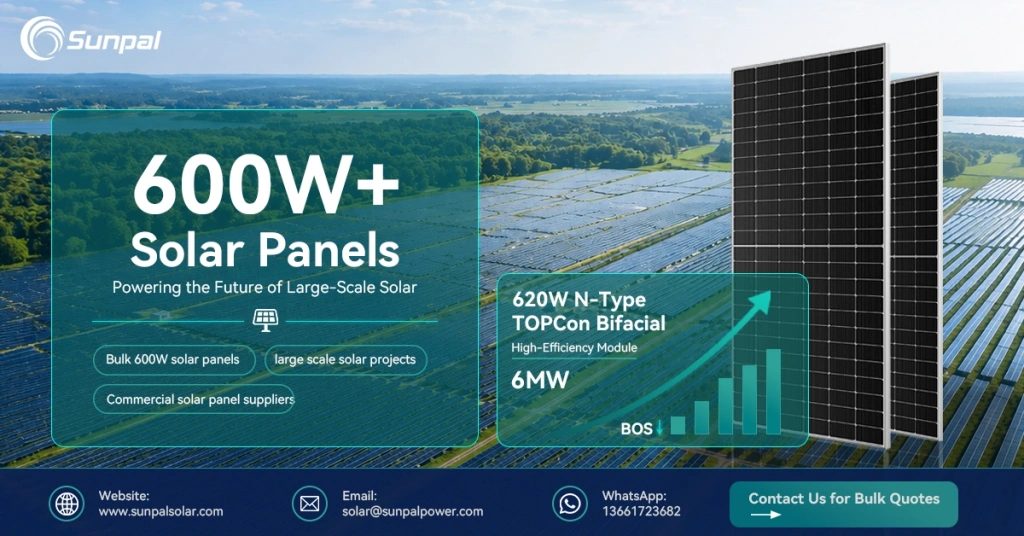
The benefits of 600W solar panels are particularly compelling for businesses: greater energy density, significantly lower balance-of-system (BOS) costs, faster installation timelines, and improved long-term ROI. This detailed commercial solar panel size comparison explains why larger, more powerful panels are the smarter investment for projects ranging from 100 kW to multi-megawatt scale.
Sunpal, a global leader in high-power solar technology, delivers reliable 600W–750W solutions engineered for demanding commercial applications. This comprehensive guide examines the technical, economic, and practical reasons why 600W panels outperform 400W options in commercial environments.
Understanding Solar Panel Wattage: Basics and Evolution
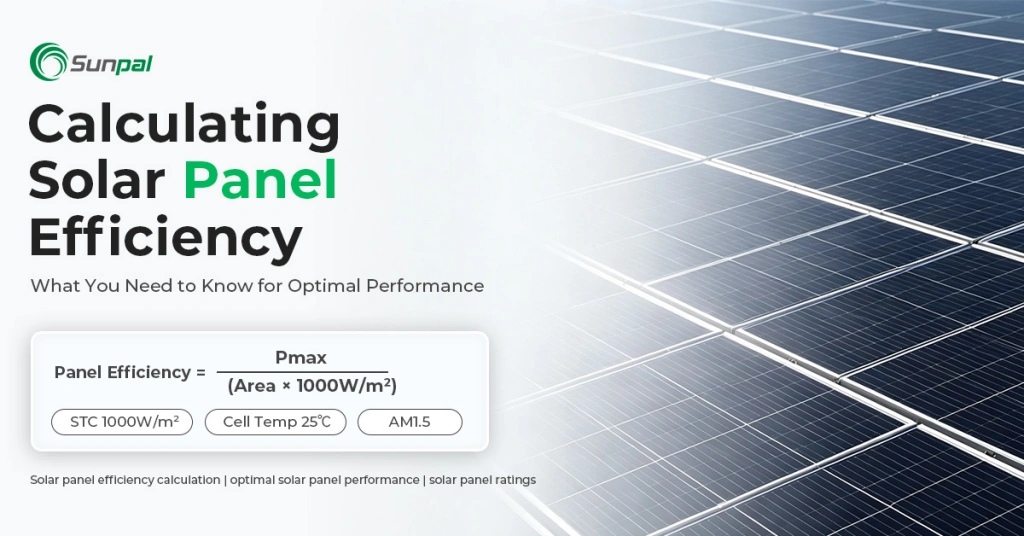
Solar panel wattage represents the maximum power output under Standard Test Conditions (STC): 1000 W/m² solar irradiance, 25°C cell temperature, and AM 1.5 spectrum. Therefore, a 600W panel theoretically generates 50% more electricity than a 400W panel under identical conditions.
The industry has evolved dramatically over the past decade. In the early 2010s, 250–300W panels were common. By the mid-2010s, 400W became the mainstream benchmark using PERC technology and smaller wafer sizes (primarily 166mm and 182mm cells). Today, 600W+ modules dominate commercial procurement due to larger wafer formats — especially 210mm rectangular cells — combined with advanced manufacturing techniques.
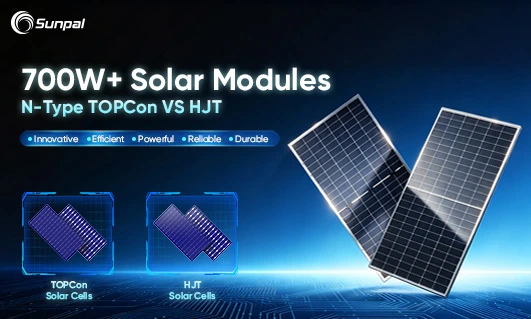
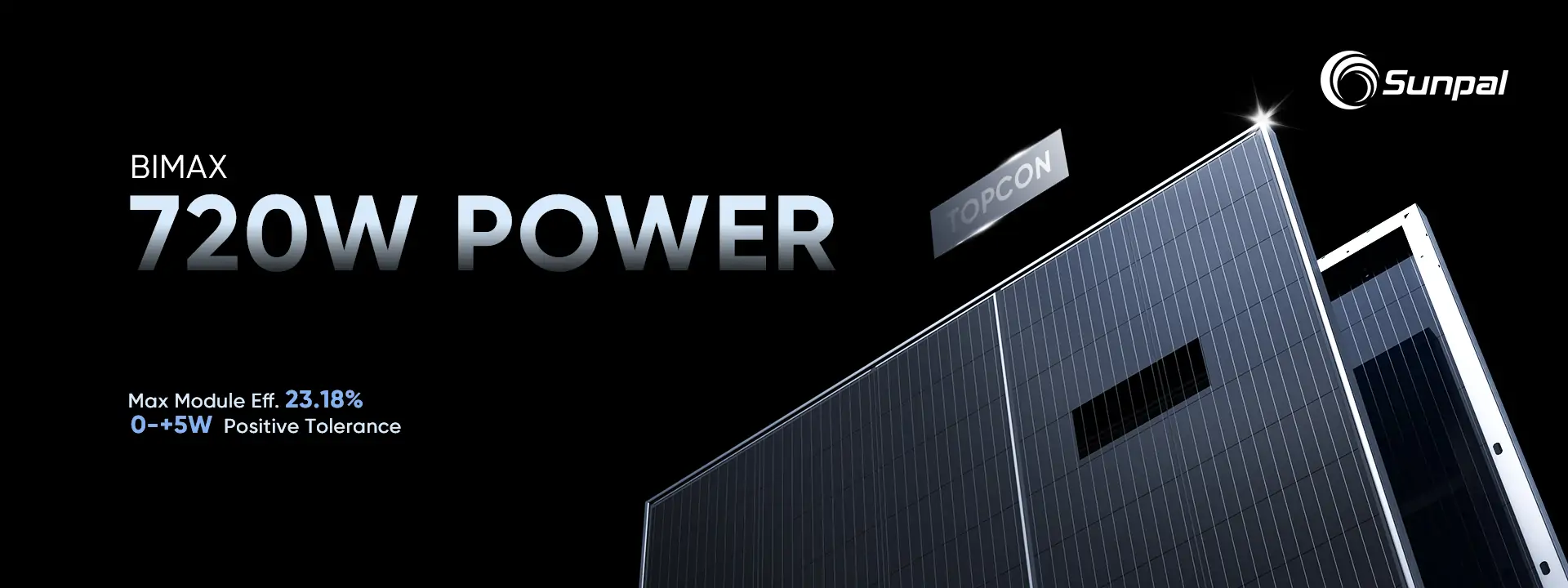
Key technological drivers include half-cut cell designs that reduce internal resistance, multi-busbar architectures that improve current collection, and next-generation cell technologies such as TOPCon (Tunnel Oxide Passivated Contact) and HJT (Heterojunction Technology). These advancements have pushed module efficiency from around 20–21% in typical 400W panels to 22–23.5% or higher in premium 600W models.
For commercial projects, wattage scaling delivers disproportionate benefits. Larger systems prioritize total installed cost per kilowatt, land or roof utilization, and lifetime energy production. High-power panels also feature improved temperature coefficients, typically ranging from -0.25%/°C to -0.30%/°C, compared to -0.35%/°C or worse in many older 400W panels. This means less power loss during high-temperature operation, which is common on large industrial rooftops.
Additionally, 600W modules often incorporate bifacial technology, allowing them to capture reflected light from the rear side and generate 10–30% additional energy depending on ground albedo and system design.
Side-by-Side Comparison: 600W vs 400W Solar Panels
A thorough commercial solar panel size comparison reveals substantial differences that directly impact project economics.
Detailed Specifications Comparison Table
| Parameter | 400W Panel | 600W Panel | Commercial Advantage |
| Typical Dimensions (mm) | 1,720–2,000 × 1,000–1,135 | 2,270–2,400 × 1,130–1,305 | Higher power per unit area |
| Weight (kg) | 20–24 | 31–38 | Fewer panels offset handling costs |
| Module Efficiency | 20.0–21.5% | 22.0–23.5% | 8–15% better energy density |
| Module Area (m²) | ~2.0–2.2 | ~2.65–2.85 | More watts per square meter |
| Cell Configuration | 108–144 half-cut | 132–156 half-cut (larger cells) | Improved current & voltage matching |
| Temperature Coefficient | -0.34 to -0.37%/°C | -0.25 to -0.30%/°C | Superior high-temperature performance |
| Bifacial Gain Potential | Limited | 10–30% | Higher energy yield in suitable sites |
| Warranty (Product/Power) | 12–15 / 25 years | 15–25 / 30–35 years | Longer asset life |
Data based on industry averages from leading manufacturers including Sunpal's 600W series.
Performance Analysis
Beyond raw specifications, 600W panels enable better string configurations with higher voltage and lower current, reducing cable losses and allowing more efficient inverter matching. A typical commercial array using 600W modules requires 30–35% fewer panels, dramatically cutting the number of connectors, junction boxes, and combiner boxes.
Cost Perspective
While 600W panels may carry a modest premium per watt at the factory gate, the total project cost is usually lower. Savings in racking materials, wiring, labor, and installation time frequently deliver 15–25% reduction in overall BOS costs. Logistics are also simplified because fewer truckloads and crane lifts are needed.
Commercial Solar Panel Size & Specification Comparison
400W vs 600W (Premium Large-Format Modules for Utility & Commercial Projects)
Key Technical Comparison
Side-by-Side Specification Overview
| Parameter | 400W Panel | 600W Panel | Advantage |
|---|---|---|---|
| Module Efficiency | 20.0–21.5% | 22.0–23.5% | Higher output density |
| Area (m²) | ~2.0 | ~2.8 | More power per module footprint |
| Weight (kg) | 20–24 | 31–38 | Fewer modules per MW |
| Temp Coefficient | -0.34 to -0.37%/°C | -0.25 to -0.30%/°C | Better hot-climate performance |
| Mechanical Load | 2400 Pa | 5400 Pa | Stronger structure |
| Panels per 1MW | ~2,500 | ~1,667 | -33% BOS cost reduction |
Evolution of Solar Panel Technology: From 400W to 700W+
Key Benefits of 600W Solar Panels for Commercial Projects
The benefits of 600W solar panels become most evident at commercial scale.
1. Fewer Panels, Dramatically Lower Installation & Labor Costs
A 1 MW system requires approximately 2,500 units of 400W panels versus only ~1,667 units of 600W panels — a reduction of roughly 33%. This directly translates into 25–35% less mounting hardware, 30% fewer electrical connections, and substantially reduced labor hours. Many EPC contractors report installation cost savings of 18–28% when using high-power modules.
2. Superior Space Efficiency & Energy Density
Commercial rooftops and ground mounts often have strict space limitations. 600W panels generate significantly more power per square meter, enabling developers to maximize system capacity without expanding the project footprint. This is especially valuable for urban warehouses, manufacturing facilities, and agricultural projects with constrained land.
3. Reduced Balance of System (BOS) and O&M Costs
Fewer panels mean fewer components overall. This reduces capital expenditure on racking, inverters, cabling, and combiner boxes while lowering long-term operations and maintenance expenses. With fewer connection points, the risk of system failures decreases, improving reliability and reducing downtime.
4. Higher Energy Yield and Faster ROI
Advanced 600W modules typically deliver better real-world performance through improved temperature behavior, lower degradation rates (often <0.4% annually after Year 1), and bifacial energy gains. Many commercial installations achieve payback periods of 5–7 years, with LCOE (Levelized Cost of Energy) dropping by 10–20% compared to 400W-based systems.
Sunpal-Specific Advantages
Sunpal's 600W series (including HiMAX 5N TOPCon bifacial models) feature industry-leading efficiency, robust mechanical load capacity (up to 5400/2400 Pa), and extended warranties. Visit Sunpal's sunpalsolar.com/category/pv-modules/topcon/himax-5n/ to review detailed datasheets, compatibility tools, and configuration options.
Quantified ROI Example
For a typical 500 kW commercial rooftop:
- 400W system: ~1,250 panels, higher BOS, longer installation.
- 600W system: ~833 panels → estimated total cost savings of 18–24%, faster deployment by 2–3 weeks, and 12–18% higher lifetime energy production.
Technical Deep Dive: What Enables 600W+ Performance
High-power modules succeed through innovation:
- Cell Technologies: TOPCon and HJT offer higher efficiency and lower recombination losses than traditional PERC.
- Design Features: Half-cut cells reduce resistive losses; multi-busbar and larger 210mm wafers boost output. Bifacial dual-glass designs enhance durability and energy gain.
- Durability: Enhanced PID resistance, high wind/snow load ratings (up to 5400/2400 Pa), and low LID/LETID make them suitable for demanding commercial environments.
- Compatibility: Optimized for modern trackers, string inverters, and high-voltage systems.
Addressing Challenges: Heavier panels require proper structural assessment and specialized handling, but experienced installers manage this efficiently with minimal added cost.
Sunpal 600W Bifacial Solar Panel Installation on Commercial Rooftop

25-Year Degradation Curve: 600W vs 400W Solar Panels
Long-term performance comparison based on PERC vs TOPCon / HJT bifacial technologies
Power Output Degradation Over Time
Key Output Comparison Points
| Year | 400W Output (W) | 600W Output (W) | Advantage |
|---|---|---|---|
| 0 | 400 | 600 | +200W |
| 5 | 381.5 | 582.8 | +201.3W |
| 10 | 371.1 | 572.6 | +201.5W |
| 15 | 361.0 | 562.7 | +201.7W |
| 20 | 351.2 | 552.9 | +201.7W |
| 25 | 341.6 | 543.3 | +201.7W |
Real-World Case Studies and Applications
In large rooftop and ground-mount C&I projects, 600W+ panels consistently outperform expectations. One industrial facility achieved 22% faster installation and 18% higher specific yield after switching to high-power modules.
Bifacial 600W arrays in open areas often exceed performance models by 15–25% due to albedo effects. Sunpal deployments demonstrate strong results in warehouses and manufacturing plants, with clients reporting accelerated payback and improved energy independence.
1MW Rooftop Energy Production: 400W vs 600W (25-Year Outlook)
Comparative real-world energy yield analysis showing how next-generation 600W modules outperform traditional 400W systems over lifetime operations.
📊 Key Technical Insight
Over a 25-year lifecycle, 600W high-efficiency modules consistently deliver higher annual output due to lower degradation rates and improved temperature performance. The performance gap accumulates year over year, resulting in nearly 20% higher lifetime energy yield.
Considerations and When 400W Might Still Make Sense
High-wattage panels are not universal. Smaller rooftops with weight or layout constraints, very tight budgets, or residential-scale projects may favor 400W modules for easier handling and flexibility.
Decision Framework:
- Project >100 kW with ample space → Prioritize 600W.
- Structural limits or complex roof → Evaluate 400–500W.
- Always conduct a professional site assessment.
Frequently Asked Questions (FAQs)
1. What is the main difference between 600W and 400W solar panels?
The primary difference lies in power output, efficiency, and physical size. A 600W panel produces 50% more power under the same conditions while offering higher module efficiency (22–23.5% vs 20–21.5%). 600W panels use larger cells (often 210mm) and advanced technologies like TOPCon or HJT, resulting in better energy density and lower temperature-related losses. For commercial projects, this translates into fewer panels, reduced system costs, and higher overall energy yield.
2. Are 600W solar panels more expensive than 400W panels?
While 600W panels may have a slightly higher price per watt at purchase, the total project cost is usually lower. The reduction in the number of panels (about 33% fewer for the same capacity) leads to significant savings in racking, wiring, labor, and installation. Most commercial buyers see a net 15–25% reduction in balance-of-system (BOS) costs when switching to 600W modules.
3. How much space can I save by using 600W panels instead of 400W?
You can typically achieve 20–30% higher power output per square meter. For a 1 MW system, 600W panels require roughly 30% less roof or ground area compared to 400W panels. This makes them ideal for space-constrained commercial rooftops, warehouses, and industrial facilities.
4. Are 600W panels compatible with existing inverters and mounting systems?
Yes, in most cases. Modern 600W panels are designed for high-voltage string inverters. However, it is recommended to verify string configuration and inverter MPPT range with your installer. Sunpal's 600W series is engineered for seamless compatibility with leading inverter brands and tracking systems.
5. Do 600W panels have better warranties than 400W panels?
Generally yes. Premium 600W modules, including Sunpal's lineup, often come with 15–25 year product warranties and 30–35 year linear power warranties. This reflects their superior durability and lower annual degradation rates (typically under 0.4% after the first year).
6. What are the installation challenges with heavier 600W panels?
600W panels weigh 31–38 kg compared to 20–24 kg for 400W models. This requires proper structural roof assessments and may need specialized lifting equipment or more personnel during installation. Experienced EPC contractors handle this efficiently, and the overall labor savings from fewer panels usually outweigh the handling differences.
7. How significant are the bifacial gains with 600W panels?
Bifacial 600W panels can generate an additional 10–30% energy yield depending on ground reflectivity (albedo), mounting height, and location. In commercial ground-mount or light-colored rooftop installations, gains of 15–25% are common, significantly improving ROI.
8. What is the expected ROI and payback period for a 600W commercial solar system?
Most commercial projects using 600W panels achieve payback in 5–8 years, depending on electricity rates, incentives, and system design. The combination of lower BOS costs, higher energy yield, and longer performance warranties typically results in a 10–20% better Levelized Cost of Energy (LCOE) compared to 400W systems.
9. Are 600W panels suitable for all types of commercial projects?
They are ideal for most projects above 100 kW with standard rooftops or ground space. However, very small systems, roofs with severe weight limits, or highly complex structures may still use 400W or 500W panels. A professional site assessment is always recommended.
10. Why should I choose Sunpal for 600W or higher wattage solar panels?
Sunpal specializes in high-power solar technology (600W–750W+) with advanced TOPCon and bifacial modules, strong mechanical durability, and global certifications. We offer comprehensive support including system design, technical guidance, and reliable long-term warranties. Our 600W series is engineered specifically for commercial and industrial performance. Visit our Web to explore specifications and request a quote.
Conclusion and Call to Action
For commercial solar projects, 600W panels are superior in efficiency, cost-effectiveness, and performance. The benefits of 600W solar panels — fewer components, higher yields, and faster ROI — make them the smarter choice for forward-thinking businesses.
Sunpal stands ready as your partner in high-power solar solutions, offering reliable 600W–750W modules backed by strong warranties and technical expertise.
Ready to upgrade your energy strategy? Contact Sunpal today for a free consultation, custom system design, or quote. Explore our sunpalsolar.com/best-all-black-solar-panels-670-680-690w-for-commercial/ and sunpalsolar.com/category/pv-modules/ to start maximizing your commercial solar investment.