a +

From Cleaning to Inspections: Complete Solar PV System Maintenance Tips

Sunpal NewsRelease Time: 2025-01-03

Tips for maintaining your solar PV system

Are you wondering how to keep your solar PV system running at peak efficiency over time? You are not alone. Many homeowners and businesses invest in solar energy systems, but often underestimate the importance of regular maintenance.

Why Solar PV System Maintenance Matters

1. The Importance of Regular Upkeep

Solar PV systems are designed for long-term operation, but like any energy system, they still require routine care to perform at their best. Without proper maintenance, even small inefficiencies can gradually reduce energy production.

A well-maintained system can continue operating at high efficiency for decades, helping ensure stable energy savings and predictable financial returns. In contrast, neglected systems often experience avoidable performance losses and higher repair risks over time.

2. Benefits of Maintaining Your Solar PV System

Beyond system health, maintenance directly impacts energy output and financial performance. Clean and well-maintained solar panels generate more electricity by reducing losses caused by dust, debris, and environmental buildup.

Regular maintenance also helps extend system lifespan and supports long-term property value. A reliable, high-performing solar installation is often seen as a strong asset in residential and commercial real estate markets.

Essential Solar PV System Maintenance Tips

1. Regular Visual Inspections of Solar Panels

Perform visual inspections of your solar panels at least once every few months. Look for any signs of physical damage, such as:

  • Cracks: Even small cracks can lead to significant issues if left unchecked.
  • Scratches: These can affect the panel's efficiency over time.
  • Loose Wiring: Ensure all wiring is secure and free from corrosion.

Addressing these issues promptly can prevent further damage and maintain your system's performance.

2. Keeping Solar Panels Clean

Dirt, dust, leaves, and bird droppings can accumulate on your solar panels over time, blocking sunlight and reducing energy production. Here’s how to clean them effectively:

  • Use a Soft Brush or Garden Hose: Gently rinse your panels with water or use a soft brush.
  • Avoid Abrasive Materials: Do not use harsh chemicals or abrasive materials that could scratch the surface.
  • Frequency: Clean your panels at least twice a year or more often if you live in a dusty area.

Cleaning Checklist
Essential Cleaning Checklist for Solar Panels

3. Trimming Surrounding Vegetation

Shading is one of the most common causes of reduced solar output. Trees and nearby vegetation can gradually block sunlight and lower energy production if not properly managed.

Regular trimming helps ensure that panels receive consistent sunlight throughout the day, maintaining stable system performance and energy yield.

4. Monitoring Energy Output

Modern solar PV systems often include monitoring tools that allow real-time performance tracking. These tools help system owners quickly identify unexpected drops in energy production.

A sudden decline in output may indicate issues such as shading, dirt accumulation, or technical faults. Early detection through monitoring helps reduce downtime and maintain optimal efficiency.

5. Checking for Pests and Environmental Impact

In some installations, birds and small animals may nest near or under solar panels, potentially causing wiring damage or blocking airflow.

Regular inspections help detect early signs of pest activity, allowing preventive measures such as protective barriers or mesh guards to be installed when necessary.

6. Professional Inspections

In some installations, birds and small animals may nest near or under solar panels, potentially causing wiring damage or blocking airflow.

Regular inspections help detect early signs of pest activity, allowing preventive measures such as protective barriers or mesh guards to be installed when necessary.

Full Linked Solar Maintenance Journey Animation

Solar Performance Lifecycle & Maintenance Workflow

8-stage full solar maintenance animation. Scroll or click icons below to switch modules, all system KPI data auto sync.

System Health

96%

Today's Output

38.6 kWh

System Efficiency

98.4%

Maintenance Score

5 / 7 Tasks
Overall Maintenance Completion Score
71%

1 Solar Performance Lifecycle

Dust, Leaves, Bird Droppings, Heat & Snow gradually degrade panel efficiency, maintenance restores full performance cycle.

Current Panel Efficiency
92%
Surface Contamination Level
8%
Recovery Target Efficiency
100%

2 AI Drone Visual Inspection

Drone aerial zoom + AI scan detect cracks, hot spots, loose cables, broken glass, delamination automatically.

Detected Fault Count
3
Inspection Pass Status
PENDING
Fault Risk Level
Medium

3 Complete Panel Cleaning Process

Remove dust, bird waste & foliage, lower surface temperature, fully recover power output.

Dust Coverage Rate
46%
Panel Surface Temp
53°C
Post-Clean Output
100%

4 Standard Cleaning Checklist Auto Completion

Automatically tick all standard operation steps, show full task completion rate.

Finished Checklist Items
0 / 4
Operation Completion
0%

5 Vegetation Shade Trimming

Sun path animation, trim overgrown trees to cut panel shadow power loss.

Shadow Coverage Area
31%
Pre-Trimming Output
63%
Post-Trimming Output
95%

6 AI Output Monitoring Dashboard

Dynamic power curve, AI alert abnormal generation loss, auto diagnose contamination root cause.

Real-Time Power
33.2 kWh
Output Loss Ratio
14%
Recovered Target Power
39.1 kWh

7 Pest & Bird Damage Protection

Bird nesting leads to cable damage & blocked airflow, install mesh guard to restore cooling efficiency.

Original Cooling Efficiency
92%
Post-Guard Cooling
100%

8 Engineer Professional Thermal & IV Inspection

Engineer + thermal imager + IV curve tester + drone, generate full system pass report.

Initial Inspection Score
78
Final Pass Score
100
System Risk Level
Low

Cleaning Best Practices for Solar Panels

Proper cleaning techniques are essential to maintain panel efficiency and avoid damage. Cleaning is most effective during cooler times of the day, such as early morning or late afternoon, when panels are not exposed to extreme heat.

Soft brushes, sponges, or low-pressure water are generally sufficient for removing surface dirt. High-pressure washing should be avoided, as it may damage sensitive panel components or seals.

Tools and Materials Needed for Cleaning

Essential Tools and Materials for Cleaning Solar Panels

Text Descriptio

Inspecting Key Components of Your Solar PV System

Inverter Maintenance Tips

The inverter plays a critical role in converting solar energy into usable electricity. It should be checked regularly to ensure proper operation, stable indicator signals, and adequate ventilation to prevent overheating.

Any error codes or abnormal behavior should be addressed promptly to avoid system downtime.

Battery Care and Maintenance

If your system includes batteries for storage:

  • Monitor battery levels frequently.
  • Follow manufacturer guidelines for charging and discharging cycles.

Battery Maintenance Checklist

Essential Battery Maintenance Checklist

Wiring and Connections Inspection

Electrical connections should remain secure and corrosion-free to maintain system efficiency and safety. Regular inspections help identify wear, loose connections, or damage that could impact performance.

Creating a Solar PV System Maintenance Schedule

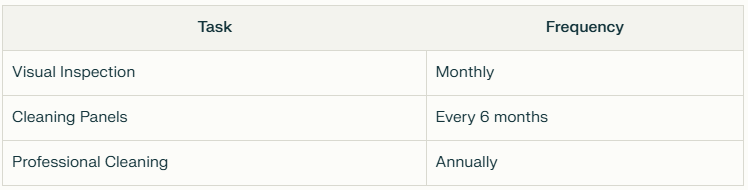
A structured maintenance routine helps ensure long-term system stability. Most solar systems benefit from a simple schedule that includes periodic visual inspections, cleaning at regular intervals, and annual professional servicing.

This consistent approach helps prevent unexpected issues and supports stable energy production throughout the year.

Recommended Maintenance Intervals

Recommended Maintenance Intervals for Optimal Performance

Troubleshooting Common Issues in Solar PV Systems

Identifying Performance Drops

If you notice a drop in energy output:

  • Check for dirt or debris on the panels.
  • Inspect wiring connections for looseness or damage.
  • Review inverter status lights for error messages.

Addressing Physical Damage to Panels

If you find cracks or chips in the glass:

  • Contact a professional immediately.
  • Consider replacing damaged panels to maintain efficiency.

Resolving Electrical Issues

If there are electrical issues:

  • Ensure all connections are secure.
  • Consult an electrician if problems persist.

Future Trends in Solar PV System Maintenance

Advancements in monitoring technology and smart energy systems are transforming how solar maintenance is managed. Modern systems are increasingly capable of detecting performance issues in real time and providing automated alerts when maintenance is required.

As solar technology continues to evolve, predictive maintenance and smart diagnostics will play a larger role in improving system reliability and efficiency.

Conclusion: Why Focus on Solar PV System Maintenance Tips?

In summary, maintaining your solar PV system is essential for maximizing efficiency and longevity. By following these Solar PV System Maintenance Tips, you can protect your investment while enjoying the benefits of renewable energy solutions.

If you're considering investing in solar solutions or need assistance with maintenance plans tailored to your specific needs, reach out to experts who can guide you through the process. At Sunpal Solar, we provide high-quality solutions tailored specifically for your requirements—ensuring optimal performance year-round! Don’t hesitate—buy solar panels from a reliable manufacturer today! Embrace innovation now—let's build a sustainable future together!

FAQs About Solar PV System Maintenance Tips

1. How often should I clean my solar panels?

It’s generally recommended to clean your solar panels every six months, but if you live in a dusty area or have nearby trees, you may need to clean them more frequently.

2. Can I perform maintenance myself?

Yes! Many maintenance tasks, such as cleaning and visual inspections, can be done by homeowners. However, professional inspections are recommended annually for safety and thoroughness.

3. What should I do if I notice reduced energy output?

Check for dirt accumulation on the panels first. If they’re clean but output is still low, inspect wiring connections and consult with a professional if needed.

4. Are there warranties covering maintenance?

Most warranties cover defects but may not cover maintenance tasks like cleaning. Always check with your manufacturer for specific terms related to warranties.

5. What tools do I need for basic maintenance?

Basic tools include a soft brush for cleaning, a garden hose for rinsing, and safety equipment if accessing rooftops.

6. How do I know when my solar panels need professional help?

If you notice significant drops in energy production despite cleaning or if there are visible signs of damage (like cracks), it’s time to call in an expert.

7. What happens if I don’t maintain my solar PV system?

Neglecting maintenance can lead to reduced efficiency, increased electricity costs, potential damage requiring costly repairs, and ultimately a shorter lifespan for your system.

Free to contact us