


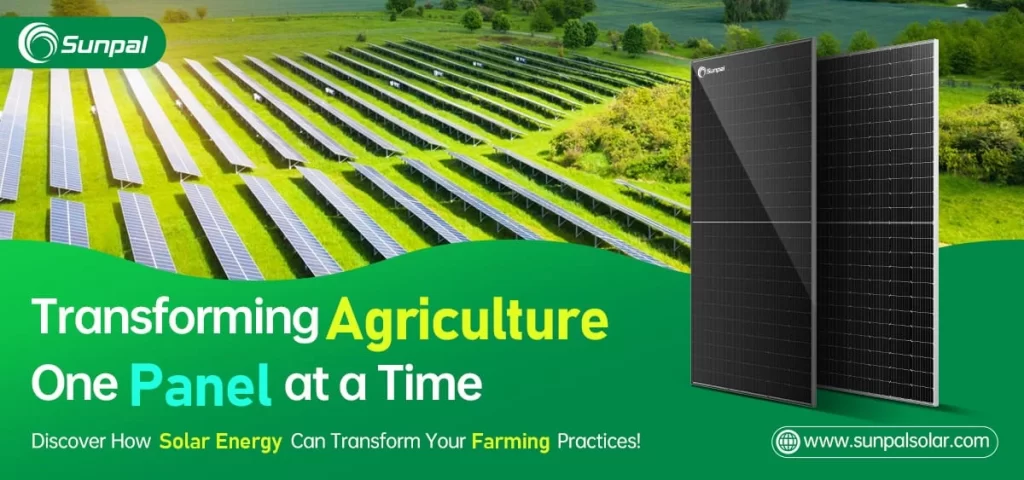
What Are Solar Panels for Farms?
Are you a farmer and thinking about the benefits of solar panels for farms?
You are not alone. Many agricultural producers are turning to solar energy to reduce costs and increase sustainability.
With rising energy prices and an increasing focus on renewable resources, installing solar panels on your farm can be a game changer.
In this comprehensive guide, we’ll explore the many benefits of solar panels for farms, how they work and what you need to know before you decide to make the switch.
Find out how solar panels can revolutionize your farming business!
Benefits of Installing Solar Panels for Farms
Solar panels can help farms reduce purchased electricity, improve energy independence, make productive use of barn roofs or available land, and support long-term sustainability goals. Depending on the system design, they may also power irrigation, pumps, refrigeration, ventilation, lighting, and other agricultural loads.
1.Lower Electricity Costs
Solar panels can significantly reduce your electricity bills.
Many farmers report savings of thousands of dollars per year by generating their own electricity.
2. Greater Energy Independence
If you generate your own electricity, you reduce your dependence on the power grid.
This is particularly important at times of peak consumption when energy costs can soar.
Solar panels put you in control of your energy production.
3. Sustainable Farm Operations
Using solar energy helps to reduce your carbon footprint.
It is a clean, renewable energy source that helps to preserve the environment.
Adopting solar technology can support broader sustainable farming practices.
4. Productive Use of Roof and Land
Installing solar panels can make productive use of suitable farm buildings, roofs, or available land.
Barn-mounted systems can use existing roof space, while ground-mounted systems can be designed around available land, site conditions, access requirements, and future farm use.
5. Potential Financial Incentives
Eligible farm solar projects may qualify for federal, state, utility, USDA, or other incentive programs, depending on location and current program requirements.
Eligible incentives may reduce the net cost of a solar project, but availability, eligibility, and funding requirements vary by program.
How Much Can Solar Panels Save a Farm
There is no single savings figure for every farm. Annual savings depend on electricity use, utility rates, daytime load, system size, solar resources, self-consumption, export rules, financing, incentives, maintenance, and battery storage.
Estimated Annual Savings = Solar Electricity Used On-Site × Utility Electricity Rate + Export Compensation − Annual System Costs
For example, if a farm uses 300,000 kWh/year, with solar offsetting 150,000 kWh on-site at $0.12/kWh, the theoretical value of avoided electricity purchases is:
150,000 × $0.12 = $18,000/year
This is a demonstration calculation only, not a project-specific savings estimate. It excludes financing, maintenance, export compensation, incentives, and other costs. Actual savings should be calculated using the farm's electricity use, solar production, utility rates, and applicable grid rules.
Types of Solar Panels for Agricultural Use
When considering solar panels for farms, it's essential to know which types are available. Here are some common options:
1. Monofacial Solar Panels
These panels capture sunlight from one side and are typically used in traditional installations.
They are efficient and widely available, making them a popular choice among farmers.
2. Bifacial Solar Panels
Bifacial solar panels capture sunlight from both sides, increasing energy production.
They are particularly effective in environments with reflective surfaces, such as snow or sand.
3. Thin-Film Solar Panels
These lightweight panels are flexible and can be integrated into various surfaces, including building materials.
While they may have lower efficiency compared to crystalline options, they can be advantageous in certain applications.
4. Agrivoltaic Systems
Agrivoltaics combines solar power generation with agricultural activities on the same land. Depending on the system design, solar panels can be installed above or between crops and grazing areas, allowing solar generation and farming to share the same space. USDA Climate Hubs agrivoltaics guidance

Barn-Mounted vs Ground-Mounted Solar for Farms
Farm solar systems can be installed on suitable agricultural buildings or available land. Barn-mounted systems make use of existing roof space without using additional farmland, while ground-mounted systems provide more flexibility in system size, orientation, and layout.
Barn-mounted systems require a suitable roof with adequate structural condition, space, and solar exposure. Ground-mounted systems require suitable land and should account for soil conditions, drainage, farm machinery, and maintenance access.
The choice depends on roof condition, available land, shading, access, electricity needs, and future farm use. U.S. Department of Energy Farmer's Guide to Going Solar
How Much Land Do Solar Panels for Farms Require?
One common concern is space—how much land will you need for solar panels for farms?
- Roof-Mounted Systems: If you have suitable buildings like barns or silos, roof-mounted solar panels require no additional land at all.
- Ground-Mounted Systems: The land needed depends on the size of the system.
Considerations:
- Assess available space on your farm.
- Determine how much electricity you want to generate.
- Consult with a solar provider to evaluate your specific needs.
What Is Agrivoltaics?
Agrivoltaics combines solar power generation with agricultural activities on the same land. Depending on the system design, solar panels can be installed above or between crops and grazing areas, allowing solar generation and farming to share the same space. USDA Climate Hubs agrivoltaics guidance
Crops
Agrivoltaic systems can support certain crops grown beneath or between solar panels. The partial shade from the panels may help reduce heat exposure and slow moisture loss in some growing conditions, which can potentially reduce irrigation needs. However, the effects vary by crop type, climate, panel height, spacing, and system design.
Crop selection should consider sunlight requirements, local growing conditions, panel configuration, and access for planting, harvesting, and other farm operations.
Livestock Grazing
Solar sites can sometimes support compatible livestock grazing, allowing agricultural production and solar generation to share the same land. Proper panel height, spacing, fencing, livestock access, and equipment clearance should be considered when designing a grazing-compatible solar system.
Water and Shade
Solar panels can provide partial shade that changes the amount of sunlight and heat reaching crops and soil. In some agricultural settings, this may help reduce heat stress and retain soil moisture, potentially lowering irrigation needs.
Solar power can also support farm water and irrigation systems. For example, electricity generated by a solar system can be used to operate irrigation pumps and other water-related equipment, while battery storage can provide energy when solar production is lower.
The actual benefits depend on crop type, climate, seasonal conditions, panel design, and site layout.
Limitations
Agrivoltaic projects require careful planning to balance solar generation with agricultural productivity. Crop compatibility, panel height and spacing, machinery access, irrigation, drainage, maintenance, local regulations, and long-term farm use should all be evaluated before installation.
Farmers should also consider whether solar panels could affect planting, harvesting, livestock movement, or the operation of agricultural equipment. Agrivoltaic systems should be designed around the farm's existing operations rather than treated as a one-size-fits-all solution.
What Should Farmers Consider Before Installing Solar?
Before installing solar panels, farmers should evaluate both their energy needs and the conditions of the installation site.
Electricity Consumption
Review annual and daytime electricity use to determine an appropriate solar system size and understand how much solar energy the farm may use directly.
Roof or Land Suitability
Check roof condition, available space, shading, orientation, soil conditions, and site access to determine whether the location is suitable for solar installation.
Interconnection
Confirm grid connection requirements and applicable export or net-metering rules with the local utility before installing a grid-connected solar system.
Soil and Drainage
For ground-mounted systems, evaluate soil conditions, drainage, erosion risks, and potential impacts on agricultural productivity.
Farm Machinery
Make sure the solar layout does not interfere with tractors, irrigation equipment, livestock movement, maintenance access, or other farm operations.
Future Land Use
Consider planned farm expansion, new buildings, crop changes, equipment needs, and other long-term land-use plans before selecting the system location.
Solar Incentives and Financing for U.S. Farms
Solar projects for U.S. farms may have access to federal tax incentives, USDA programs, loans, power purchase agreements (PPAs), and state or utility programs. Eligibility and funding requirements vary and can change over time, so farmers should verify current rules before including incentives or financing benefits in a project cost or payback calculation.
Federal Tax Incentives
Eligible farm solar projects may qualify for federal clean-energy tax incentives under current tax rules. For qualifying clean electricity facilities and energy storage technology placed in service after December 31, 2024, the Section 48E Clean Electricity Investment Credit generally starts at a 6% base rate and may increase when applicable requirements are met. IRS Clean Electricity Investment Credit
Because federal tax rules and eligibility requirements can change, farm owners should review current IRS guidance and consult a qualified tax professional before including a tax credit in project financial calculations.
USDA REAP
The USDA Rural Energy for America Program (REAP) supports eligible agricultural producers and rural small businesses seeking financing for renewable energy systems and energy-efficiency improvements. USDA Rural Development energy programs
For FY2026, USDA states that new REAP grant applications are not currently being accepted, while guaranteed loan applications may be submitted. Farmers should check the latest USDA guidance before including REAP funding in a project financing plan.
Loans and PPAs
Solar loans can spread project costs over time while allowing a farm to own the solar system. A power purchase agreement (PPA) allows a farm to purchase electricity generated by a solar system without directly owning the system. Contract terms, electricity prices, maintenance responsibilities, and ownership arrangements vary by agreement.
State and Utility Programs
States and utilities may offer rebates, grants, tax incentives, financing programs, net-metering arrangements, or other electricity compensation programs for eligible solar projects. Availability and requirements vary by location and can change over time.
Farmers should verify current program requirements before using any incentive or financing benefit in a solar project cost, savings, or payback calculation.
Solar Panel Maintenance on Farms
Once installed, how much maintenance do solar panels for farms require?
Routine Maintenance Tips:
- Regularly clean the panels to remove dust and debris.
- Inspect connections and wiring periodically.
- Monitor system performance through monitoring software provided by your installer.
Solar panels are designed for long-term operation, but maintenance needs and system lifespan vary depending on equipment, site conditions, environmental exposure, installation quality, and maintenance practices.
Real-World Farm Solar Applications
Let’s look at some real-world examples of how farmers have integrated solar technology:
Example 1: Jack’s Solar Garden
Located in Boulder, Colorado, this innovative farm combines agriculture with solar power generation.
Jack’s Solar Garden features over 3,200 solar panels that produce enough electricity to power around 300 homes while also growing various crops underneath.
Example 2: The Parrys’ Poultry Farm
In Delaware, the Parrys installed a solar system that saved them $40,000 in their first year alone!
This investment allowed them to take control of their electricity production while enhancing their farm's sustainability.
FAQs About Solar Panels for Farms
As you consider the integration of solar panels for farms, you likely have many questions. Here are some frequently asked questions that can help clarify your decision-making process:
What Are the Main Benefits of Solar Panels for Farms?
Solar panels can help farms reduce electricity purchases, increase energy independence, and support more sustainable operations. Depending on the site and system design, solar can also make productive use of suitable barn roofs or land and support applications such as irrigation and other farm equipment.
How Much Can Solar Panels Save a Farm?
Farm solar savings depend on electricity consumption, utility rates, solar production, system size, self-consumption, export compensation, financing, incentives, and operating costs. A farm with significant daytime electricity demand may use more solar generation directly and potentially achieve greater electricity cost savings. Project-specific savings should be calculated using the farm's electricity use, solar production, utility rates, and applicable grid rules.
Are Solar Incentives Available for Farms?
Eligible farm solar projects may have access to federal tax incentives, USDA programs, state incentives, utility programs, or other financing options. Availability and requirements vary by project, location, ownership, and current program rules. Farmers should verify current eligibility and funding requirements before including incentives in a project financial calculation.
Can Farms Combine Crops and Solar Panels?
Yes. Agrivoltaic systems combine solar generation with agricultural activities on the same land. Certain crops can be grown beneath or between solar panels, although suitability depends on sunlight requirements, climate, panel height, spacing, and system design. Proper planning is needed to maintain access for planting, harvesting, irrigation, and other farm operations.
How Much Land Does Farm Solar Require?
Land requirements depend on system size, panel configuration, site conditions, and whether the system is roof-mounted or ground-mounted. Barn-mounted systems can use existing roof space without requiring additional farmland, while ground-mounted systems require suitable land and adequate space for panels, access, equipment, and maintenance.
Can Solar Power Irrigation Equipment?
Yes. Solar electricity can be used to operate irrigation pumps, water systems, and other electrical farm equipment. Battery storage can also store excess solar generation for use when solar production is lower, depending on the system design and project requirements.
Is Barn-Mounted or Ground-Mounted Solar Better?
Neither option is universally better. Barn-mounted solar can make use of existing roof space, while ground-mounted systems may provide greater flexibility in orientation, layout, and system expansion. The appropriate option depends on roof condition, available land, shading, access, electricity needs, agricultural operations, and future land use.
What Should Farmers Check Before Installing Solar?
Farmers should evaluate electricity consumption, roof or land suitability, grid interconnection requirements, soil and drainage conditions, machinery access, and future land-use plans when planning a solar project.
What Maintenance Does Farm Solar Require?
Farm solar systems generally require routine monitoring, periodic inspections, and cleaning when necessary. Farmers should also check wiring, connections, mounting components, and system performance according to the equipment manufacturer's recommendations. Maintenance needs can vary depending on the site environment and system design.
How Long Do Solar Panels Last?
Solar panels are designed for long-term operation, with many systems expected to operate for 25 years or more. Actual performance over time depends on module quality, environmental conditions, installation quality, maintenance, and gradual performance degradation.
Conclusion: Embracing Solar Panels for Sustainable Farming
The future looks bright for farmers considering solar panels for farms!
With numerous benefits ranging from cost savings to environmental sustainability, going solar is an investment worth making.
If you're ready to take control of your energy production and enhance your farming operations, consider exploring options from trusted manufacturers like Sunpal Solar.
You’ll find innovative solutions tailored specifically to agricultural needs.
To get started on your journey toward sustainable farming practices powered by clean energy, visit sunpalsolar.com today! You can easily buy solar panels from a reliable manufacturer, ensuring quality and performance that will last for years.
Let’s work together toward a sustainable future powered by clean energy!